Artist Talk: Marc Fournel

Artist Talk: Marc Fournel


“From a circle to a sphere”
Artist Talk: Marc Fournel
Tuesday 25 November 2008, 5.30pm – 6.30pm
Immersive Vision Theatre University of Plymouth
Cost: Free
i-DAT has been awarded a Canada Council for the Arts ‘Grants to New Media and Audio Artists: New Media Residencies’ for the sound and installation artist Marc Fournel. This new award will enable Marc to develop a project incorporating Arch-OS and the Immersive Vision Theatre (IVT).
In this talk, Marc, will present some of his video installations and latest art work using local positioning systems. He will also present his current research being developed through his residency, with a specific focus on working with the Arch-OS system and the IVT.
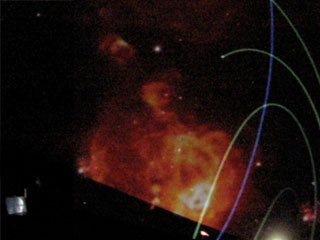
This will further be an opportunity to experience the IVT’s unique immersive system, whilst re-rendering the universe on the fly through ‘UniView’ (http://www.scalingtheuniverse.com), a computer graphics platform bringing information data- bases to life in a 3D environment, much like an immersive computer game.

Fallout Boys and Cannon Girls

Fallout Boys and Cannon Girls


Fallout Boys and Cannon Girls
Workshops for young people aged 13 – 16.
Plymouth Arts Center, Saturday’s 27 September, 4 October & 11 October 11am – 4pm.
Free

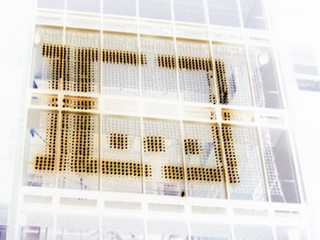
Join artist and writer Mark Greenwood, working in association with i-DAT and Plymouth Arts Centre, for three days of creativity linked to the exhibition Kings Island by Tom Dale. During these workshops participants will be using writing, sculpture and objects, as Mark leads an investigation into local myths, monuments and celebrities. The resulting work that will be exhibited during the Plymouth Respect Festival on i-DAT’s 10m x 5m low resolution Urban Screen.
Advanced booking is essential and you can book for one or both workshops.
Contact Plymouth Arts Centre on: 01752 206 114 or info@plymouthartscentre.org
Artist’s Statement:
Mark Greenwood is a performance artist/ writer originally from Newcastle but now based in Plymouth. He has presented work across the U.K, Europe and the United States over the last ten years. Utilising indefinite durational practice as an art form, Greenwood’s interests lie in writing as a socio-physiological practice and the interrelations between gender, memory, cultural location and identity. Parallel to the generation of poetic texts through experimental procedures that seek to subvert and resist the structures of hegemonic discourse, Greenwood incorporates the ideology of gambling and chance in his current work.
As well as collaborating with London artist Liam Yeates through the medium of film and video, Mark regularly curates the Red Ape Language Project at Plymouth Arts Centre and contributes writing for a number of on-line art journals including AN Interface, Writing from Live Art and Total Theatre. He recently completed an MA in Performance Writing at Dartington College of Arts and is currently researching a doctorate in Fine Art at Kingston University in London.

Homo Ludens Ludens

Homo Ludens Ludens

LABoral
20/04/08. i-DAT presents The Play Algorithm – A(n):= [r = 1,2,..N] (B Aga, Katina Hazelden and Mike Phillips) at HOMO LUDENS LUDENS 2008, LABoral, Gijon, Asturias, Spain. The Play Algorithm is an element of Social Operating System (S-OS) (www.s-os.org). LABoral continues its ongoing task of exploring notions of play and its concomitant interrelationship with present-day society.

L/SL – Interactive Media

L/SL – Interactive Media

dome
We are seeking a Lecturer to champion the ongoing development of an existing suite of innovative Undergraduate Programmes, to play a pivotal role in the world-class research (under RAE Unit 63, Art & Design) and innovation of the Arts Science Technology Group, participate in the activities of the i-DAT (www.i-dat.org) Centre of Expertise and contribute to the formation of the interdisciplinary Centre for Creative Design and Technology. This post offers a rich opportunity to research and develop the potential of digital technologies to model, visualise, simulate and make manifest the invisible and immaterial and to actively and critically engage with transdisciplinary activities that operate across social, environmental and technological art and design practices.
The position requires academic leadership combined with practical interactive media software and design skills that will contribute to the delivery of the suite of Programmes and associate modules at an undergraduate and postgraduate level. The successful applicant will have substantial HE teaching experience, a track record of cross-disciplinary research and enterprise, and preferably experience of doctoral research supervision. They will have the necessary technical skills to teach and research in the overlapping fields of interaction design, physical computing, visualisation and innovative manufacturing.
Recruitment and selection will be based on individual merit, however, we should particularly like to encourage applications from women, black and minority ethnic people who are under-represented in the Faculty of Technology. For an informal discussion, please contact Mike Phillips by email mike.phillips@plymouth.ac.uk or telephone 01752 232549, although applications must be made in accordance with the details shown below.
Ref: A0609
Interviews will be held during week commencing 19 May 2008.
£28,289 to £48,161 pa
Closing date: 12 Noon, Tuesday 22 April 2008.
A Final Salary Pension Scheme is available.
Please request an application pack, quoting
Ref & Job Title, via:
www.plymouth.ac.uk/vacancies
Email: jobs@plymouth.ac.uk
Tel: 01752 588199 (24 hour answerphone)
Download PDF Advert.

Marc Fournel Canada Council for the Arts Grant – New Media Residencies:

Marc Fournel Canada Council for the Arts Grant – New Media Residencies:

Marc Fournel
i-DAT has been awarded a Canada Council for the Arts ‘Grants to New Media and Audio Artists: New Media Residencies’ for the sound and installation artist Marc Fournel. This follows initial funding from the Canada Council for the Arts for a research visit to i-DAT in September 2007, where Marc presented a first version of his installation SKIN-PÔ. This new award will enable Marc to develop a project incorporating Arch-OS and the Immersive Vision Theatre (Full Dome). Watch this space for further developments:

Immersive Vision | Why? How? What? European Workshop in Immersive Cinema.

Immersive Vision | Why? How? What? European Workshop in Immersive Cinema.

immersiveconf1.jpg

March 25th-28th 2008. The 3rd European workshop and conference in immersive cinema will be held in and around the University of Plymouth’s newly developed immersive vision theatre. The conference organisers have invited key-note speakers on the topics why dome? how dome? and what dome? and invite further contributions on each of these topics from the dome community. We welcome lectures or less formal presentations, as well as demonstrations or workshops in the immersive theatre and other domed environments.

Plymouth Arts Centre and i-DAT

Plymouth Arts Centre and i-DAT

  Screen-Shot-2013-11-05-at-22.22.18
Plymouth Arts Centre and i-DAT present a new series of projects and residencies that have been developed through an ongoing collaboration exploring new systems and technologies for artistic production, dissemination and participation that challenge traditional models of creation and consumption of art. Artists and Curator; Stanza (UK) 8 February – 6 April, Cadu (Brazil) 11 January – 11 March and Basak Senova (Turkey) 19 January – 9 February, will be residence spending time at both organisations exploring new work to create a series of new commissions and a seminar. i-DAT refer to the prominence of online social networks to create a series of creative interventions and works “S-OS: Social Operating System for Plymouth” in the galleries at Plymouth Arts Centre from the 8 February – 6 April.
http://www.plymouthac.org.uk

Social Operating System v1

Social Operating System v1

s-osproj.jpg
Social Operating System:

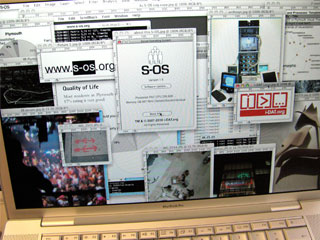
8 February – 6 April. i-DAT, in collaboration with Plymouth Arts Centre, presents: “S-OS: a Social Operating System” for the city of Plymouth. S-OS is a collection of creative interventions and strategic manifestations that provides a new and more meaningful ‘algorithm’ for modeling ‘Social Exchange’ and proposes a more effective ‘measure’ for ‘Quality of Life’. The S-OS project provides an Operating System for the social life of the City of Plymouth. It superimposes the notion of an ‘OnLine’ Social Operating System onto ‘RealLife’ human interactions, modeling, analyzing and making visible the social exchange within the City.

S-OS: Social Operating System for Plymouth.

8 February – 6 April 2007


i-DAT, in collaboration with Plymouth Arts Centre, presents: ‘S-OS: a Social Operating System’ for the city of Plymouth. S-OS is a collection of creative interventions and strategic manifestations that provides a new and more meaningful ‘algorithm’ for modelling ‘Social Exchange’ and proposes a more effective ‘measure’ for ‘Quality of Life’.

The idea of a ‘Social Operating System’ (referencing computer Operating Systems such as Mac OSX and Windows) has emerged through the prominence of OnLine Social Networking Software such as Facebook and Myspace. These websites, the software that drives them and the online communities that thrive around them form a “platform for online living where all social activities are integrated.” Wired (2007).

The S-OS project provides an Operating System for the social life of the City of Plymouth. It superimposes the notion of an ‘OnLine’ Social Operating System onto ‘RealLife’ human interactions, modeling, analyzing and making visible the social exchange within the City.

Whilst town planners and architects model the ‘physical’ City and Highways Department’s model the ‘temporal’ ebb and flow of traffic in and around the City, S-OS will model the ‘invisible’ social exchanges of the City’s inhabitants. Plymouth Arts Centre will be converted into a ‘Central Processing Unit’ to run S-OS as a RealLife Social Operating System, generating creative interventions and strategic manifestations on, by and for the citizens of Plymouth.

i-DAT, a Centre of Expertise at the University of Plymouth, is a catalyst for creative innovation across the fields of Art, Science and Technology, facilitating regional, national and international collaborations and cultural projects. As a networked organisation and ‘cultural broker’ i-DAT’s transdisciplinary agenda fosters ‘open innovation’, Knowledge exchange and reciprocal relationships between companies, institutions, communities and individuals.

Plymouth Arts Centre and i-DAT present a series of new projects and residencies that have been developed through an ongoing collaboration that explores new systems and technologies for artistic production, dissemination and participation that challenge the traditional models of creation and consumption of art.

Plymouth Arts Centre: 38 Looe Street, Plymouth, PL4 0EB
Tel.    + 44 (0) 1752 206114 / Fax.    + 44 (0) 1752 206118

S-OS: Informal Music

Andy Prior, Justin Robert

About Informal Music

‘Informal Music’ records and mixes the acoustic environment of the City of Plymouth. Presenting the noises and traces of human communications in and around city, Informal Music mixes field recordings of social exchange (conversations, songs, whistles and rants).

The resulting signals provide an acoustic residue or echo of human interaction.

The processor can be modified through interaction with the S-OS: Index Application.


S-OS: Routines

Routines Collective 

About Routines

No one really knows Plymouth – and you can bet that if you asked every one of the 240,000 residents to draw a map of their city, each map would be significantly different.

Each one of us gets to know Plymouth from our own particular perspective. We construct ‘mental maps’ of the city from the routes that we take to and from familiar places, such as our favourite shops, the people that we like to visit and our place of work.

These routes become ‘routines’ and form patterns that reflect our understanding of the city. ‘Routines’ documents a few of the routes that people take during their day. This documentation consists of:

A) GPS tracks recorded over a day and are replayed in real-time.

B) Photographs of conversations or exchanges with other people that occurred at times through out the day


S-OS: Cyborgian Geographies

Shaun Murray

About Cyborgian Geographies

Shaun Murray’s projects are harbingers for a meaningful ecological (both machinic and natural) audit of specific sites and the development of a series of tactics and protocols that can deliver to architects a full understanding of their sites and of the agents, provocateurs, cybernetic systems and disparate observers and drifters that influence and use them.

Modern architecture has failed to provide architects with these now very necessary tools to create architectures that are fully in tune with the wide gamut of artificial and natural ecological conditions. For those of us interested in the architecture for the new cyberised, biomachined inhabitants of the twenty-first century Murray’s research and propositions are a beacon in a still dark landscape of the future.


S-OS: Happies

Chris Saunders

About Happies

How happy are you? By measuring the little exchanges that take place daily you can calculate your personal ‘Happindex’. Personal Happindex’s can be collected, pooled with others and processed to measure Plymouth’s overall Happindex. The Plymouth Happindex can then be plotted to see how it performs against other more established indexes such as the FTSE, Nasdaq and Dow Jones.

To generate your Happindex you will need to either download the Happies Application to your mobile by visiting www.s-os.org or visit the S-OS exhibition at Plymouth Arts Centre and transfer it to your phone using Bluetooth. Run the application and register the exchanges that happen to you. Your personal Happindex will be calculated. Select the upload feature and it will be added to help calculate the overall Happindex for Plymouth. You can also add new ‘exchanges’ to the Happies list.


S-OS: dn[T]3 Plymouth Visual Thesaurus

Gianni Corino, Andrea Giacobino, Gabriele Isaia, Motor

 About dn[T]3 Plymouth Visual Thesaurus

Plymouth dn[T]3 or Plymouth Visual Thesaurus is an interactive video installation for public spaces like galleries, squares or mall, indoor projection and ideal for huge outdoor projections, a collective digital graffiti. This project balances art, information design, linguistic psychology and social computing.  Through a very simple interaction process the project means to show emerging knowledge pattern in the way we perceive our urban and social space and come out with new vision about collective way to organise knowledge on some current local and global issues.

The project applies a folksonomies model, typical of Internet digital world to real world, but instead of describing and classifying digital goods people are asked to contribute to the creation of a meta-knowledge about real objects, everyday situations, emotions, concepts, everyday social life, etc. The aim is to build a semantic ecosystem, a memetic ecology of the city shown it’s social capital, through a collection of tags. The semantic e analyses words sent via SMS with an inferential engine – custom folksonomies engine – and tracks each word received as: absolute frequency, relations frequency.

Interaction is free, in real-time and easy, people just need to send theirs free association words (tags) via SMS and immediately they become part of the project visual thesaurus. The SMS methodology of communication has been chosen because of the special relationship we have with the mobile phone and with words through it: sometimes intimate, symbolic, or emotionally involving. The word (tag in our case) flows from small to big, from private to public, from personal to collective.


S-OS: ten’segrity

Dan Bater, Mike Phillips.

About ten’segrity

The tenosegrity Application allows visitors to the S-OS exhibition to submit camera phone portraits to the tenosegrity database via Bluetooth. Once submitted their portrait can be interconnected within the tenosegrity collective, each connection can be weighted using a simple star rating to indicate levels of familiarity and separation.

Subsequent interaction with the application reveals the social tensions that bind a community through the dis/con-tinuous push/pull forces of tension and compression, or attraction and repulsion.

The integrity of the tensions captured within the tenosegrity application provides a numerical value of social synergy and degrees of separation. tenosegrity outputs the value of the synergetic forces within these volatile social relationships.


S-OS: Index

B Aga, Mike Phillips, Justin Roberts.

About Index

The S-OS Algorithm: A(n):= [r = 1,2,…..N], where A(n) is probably the value of Social Exchange or the Quality of Life, and [r = 1,2,…..N] are the numerous calculations that happen within a city. These calculations constitute an invisible fabric woven through the everyday processes of social exchange (a smile, a swap, a sneer) and can be understood as a Social Operating System when made manifest through the use of digital technologies.

Each of the S-OS applications exhibited in the S-OS exhibition generates a value. The S-OS Index takes the various value feeds from across the exhibition space (as represented by ‘r’) and allows visitors to the exhibition to prioritise one input over the other. This last ambiguous human interaction provides the final value of A(n)! The calculation is complete.

Distributed South Residencies: Stanza.

Distributed South Residencies: Stanza.


8 February – 8 March. In residence developing a new work / 9 March – 6 April Installation of new work. For one month the London based artist Stanza will be developing a new piece of work in residence in Plymouth Arts Centres upper gallery. The concern of the residency is for the artist to create a new piece of work. Stanza specializes in net art, networked spaces, installations and performances. His works explore artistic and technical opportunities to enable new aesthetic perspectives, experiences and perceptions within context of architecture, data spaces and online environments. This residency is made possible through the Distributed South initiative supported by Arts Council England to raise awareness of media arts in South of England. Distributed South is managed by SCAN and Space Media.

Curatorial Network Residency and Seminar. Basak Senova.

Curatorial Network Residency and Seminar. Basak Senova.


Online Curatorial Networks. 19 January – 9 February. In residence developing a curatorial seminar. Basak Senova is an international curator and founder of the online curatorial project nomad TV. She will undertake a two-week research residency hosted by Plymouth Arts Centre and i-DAT as part of the Curatorial Network programme to explore the potential of online environment and social networking tools as mechanisms for generating cultural exchange. The particular focus of the residency is on ideas of cross-cultural generosity, sharing, communication and social interaction in contemporary curatorial practice. Using the Curatorial Network’s online resources including discussion List and website as a research platform, Senova will initiate a debate about curatorial exchanges and develop a map of curatorial network in the region and internationally. In this way she will also map parallel cases and counter-actions that are linked to contemporary art practices that set new modes and channels for social, political and cultural information flow. The Curatorial Network runs a series of international curatorial research residencies and seminars as well as international visits for curators based in South West of the UK. For further information on the Curatorial Network, details of the programme and to join the discussion list, see http://www.curatorial.net/