Rosetta Life presents Performing Ourselves.

Rosetta Life presents Performing Ourselves.

i-DAT contributes to the Rosetta Life ‘Performing Ourselves’ conference:

29th March 2009, Birmingham Conservatoire.

http://www.performingourselves.co.uk/

Image from: I Can’t Draw, Rosie Page: http://www.performingourselves.co.uk/about/i-cant-draw-rosie-page/

Taking risks and pushing boundaries; delivering excellence and professionalism in arts in healthcare and sharing innovation for performance and new media arts in health care. Focussing on service delivery for the most vulnerable and frail in our communities, this conference will address how the performing arts and healthcare can work together to offer sustainable community led practices.

www.rosettalife.org

i-500 Project Launch

i-500 Project Launch

i-500 Diagram

i-500 Project Launch

The Premier of Western Australia Colin Barnett has officially opened the new Curtin Resources and Chemistry Precinct and the i-500 Project. The $116 million precinct is the culmination of partnerships between Curtin, BHP Billiton, the Western Australian Government, and the Federal Government.

i-500 Projection

i-500 System

i-500 / Curtin Resources and Chemistry Precinct OpeningChris, Ross and PaulCurtin Resources and Chemistry Precinct

http://www.i-500.org

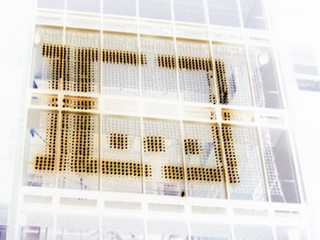
The i-500 is an artwork that will perform a vital and integral role in the development of scientific research in the fields of nanochemistry, atomic microscopy and computer modelling, applied chemistry, environmental science, biotechnology, and forensic science. Through dynamic visualizations and sonifications the artwork represents quantitative scientific research as an integral part of the architectural environment. The large-scale visual projections, distributed echo nodes and multiple sonic zones that constitute the art work reveal to the occupants a normally invisible dialogue between the researcher, the research community and the environment. The i-500 translates dynamic data from the physical and social interactions within the building into a volatile and evolving interactive art work.

The opening of the Resources and Chemistry Precinct and launch of the i-500 begins an initial engagement between the dynamic art work and the community that occupies the Precinct. This process will continue until the final manifestation of the work for the Art in the Age of Nanotechnology Perth International Arts Festival exhibition 5 February – 30 April 2010.

The i-500 is a collaborative project between Paul Thomas, Chris Malcolm and Mike Phillips who were commissioned to produce a sustainable, integrated, interactive art work from rich flows of research and general data generated through interaction in the new Curtin University Resources and Chemistry Precinct. This data will be the source material that is reflected through the architectural fabric and surface pattern of the space.

The i-500 project has established an interactive entity that inhabits the Resources and Chemistry Precinct at Curtin University of Technology. The i-500 is a reciprocal architecture, evolutionary in form and content, responding to the activities and occupants of the new structures.

To develop an integrated interactive art work that augments the physical architecture with real time data the project team has worked in close collaboration with:

Curtin University of Technology (http://www.curtin.edu.au/),

John Curtin Gallery (http://www.johncurtingallery.curtin.edu.au/),

Woods Bagot Architects (http://www.woodsbagot.com/),

Artsource (http://www.artsource.net.au/)

i-500 Ingredients:

i-500 Core Server: MySQL, PhP, Flash Engine.

Echo Node Server: MySQL, PhP, Flash Engine.

2 x Projectors

16 x Echo Node (A/V)

5 x Sonic Zones

i-500 Vision system

CAT6 /Fiber optic Network

Code

i-500 Team:

Dr Paul Thomas: http://www.visiblespace.com

Chris Malcolm: http://www.johncurtingallery.org/

Mike Phillips: http://www.i-dat.org

Lee Nutbean: http://www.i-dat.org

i-500 Launch 13/11/2009

i-500 Launch 13/11/2009

i-500 Echo Screens

The i-500 Public Art Commission is launched on 13 November 2009.

i-500 draws on the Arch-OS experience of developed by i-DAT. The i-500 project is a public art commission for Curtin University’s new Resources and Chemistry Research and Education Buildings. Working in close collaboration with Woods Bagot Architects, as part of the architects project team, the i-500 project team is creating a public artwork to be incorporated into the fabric of the complex with the intention to encourage building users to communicate and collaborate.

http://i-500.org/

i-500 PlanBuilding in progressi-500 i-Chat

i-DAT Research Informed Teaching Reports

i-DAT Research Informed Teaching Reports

Two reports produced by i-DAT following the completion of the Research Informed Teaching projects in April 2009.

1: Development of multi-disciplinary content for the Immersive Vision Theatre:
A: Final Report Enquiry-Based Teaching RiT.pdf
B: Appendix-A-C.pdf
C: AppendixD1-AHO+BARTLETT=i-DAT.pdf
D: AppendicD2-OutIn.pdf

2: Development of a Cross-Faculty Centre for Creative Design and Technology:
A: Final Report CCDT RiT.pdf
B: AppendixA-B.pdf
C: AppendixC-D.pdf
D: AppendixE1-SlidingScales.pdf
E: AppendixE2-RFID.pdf
F: AppendixE3-outin.pdf
G: AppendixE4-AHO+BARTLETT=i-DAT.pdf

1: Development of multi-disciplinary content for the Immersive Vision Theatre.
Introduction:
The original RiT bid was for a project in the area of ‘Enquiry-Based Teaching’ intended to impact upon the first year experience of BEng students. In the event, this proved difficult to implement against the background of the strategic review of the University and the development of a new Teaching and Learning strategy. Accordingly the money was used in another fast developing area of enquiry-based learning relevant to a number of disciplines, including engineering, namely the effective use of immersive content. This project was intended to capitalise on the Immersive Vision Theatre and to interface with the Centre for Creative Design and Technology, hence ensuring synergies and impact. The intent was to develop content for the newly outfitted Full Dome environment. The conversion of the William Day Planetarium from the traditional horizontal dome, circular seating and central Zeiss projector to a digital Immersive Vision Theatre was made possible through funding gained by the Experiential Learning CETL (Centre for Excellence in Teaching and Learning) coordinated by Dr Ruth Weaver. The ambition for the Immersive Vision Theatre (IVT) is to create a transdisciplinary instrument for the manifestation of material, immaterial and imaginary worlds, relevant to many disciplines.
The ‘Full Dome’ architecture now houses a powerful high-resolution projector fitted with a ‘fish eye’ lens to wrap data, models, video and images around its inner surface. A second, even higher resolution ultra-high contrast projector focuses an intensely detailed ‘central’ (to the viewer) section of the dome. The 10-speaker spatialised audio system enables the modelling of acoustic environments as well as playback through virtual speakers, i.e. more speakers than physically exist. The IVT is being used for a range of activities, from cross-disciplinary teaching to cutting edge research in modelling and visualisation.

2: Development of a Cross-Faculty Centre for Creative Design and Technology.
Introduction:
Design, innovation and creativity are hallmarks of a significant part of the provision in Arts and Technology. Equally, creative technologies are very successfully being used to unlock transformative uses of visualisation, modelling and simulation which reach from undergraduate and postgraduate education through to research and into industrial and business practice. Particularly successful exemplars of this are seen in i-DAT (Institute for Digital Arts & Technology) and in INNOVATE (Centre for Creative Industries).
The area of creative design and technology has many strands existent in the two Faculties of Arts and Technology, ranging from genetic and mimetic algorithms in engineering through a substantial body of 3D design and modelling in both Faculties, to creative arts of many types. This duplication of concepts and, often technology, exists in two different (but potentially closely linked) domains with different interpretive views of design processes. A massive opportunity exists for synergy between parts of these activities in a transformational trans-disciplinary way. Part of the excitement of this potential lies in the burgeoning career options in the area of creative design and technology and part in the transformational advances in ways of modelling, visualising and rendering in virtual reality that are offered in a synergetic collaborative partnership.

It will be possible to develop an exciting new strand of degree programmes, perhaps commencing with a Masters programme (taken as either an MA or MSc) with international draw to embed leading research concepts. This can extend down to include the existing new developments such as DSGN143 (Integrated Systems Design) in UG taught programmes. The really novel part of this proposal is that as well as embedding the various forms of discipline research within the teaching of UG and PG programmes, there is an associated development of new transformational research areas and a synergy from the body of research and research methods in two different disciplines. Virtually by definition, the developments in research informed teaching will be cutting edge in themselves.

The project was received funding for 3 years in the form of 50% support for a new lecturer position to lead integration in this area. The Faculties of Arts and Technology would each commit 25% of the cost, and guaranteed permanent employment for a successful appointee. The person would have a joint appointment in both Faculties to ensure that this activity remains straddling the interface, even though it is certain that some of the developments will be more heavily weighted towards one Faculty or the other.

Syncretica.net

Syncretica.net


“In this technoetic culture, the art we produce is not simply a mirror of the world, nor is it an alibi for past events or present intensities. Engaging constructively with the technological environment, it sets creativity in motion, within the frame of indeterminacy, building new ideas, new forms, and new experience from the bottom up, with the artist relinquishing total control while fully immersed in the evolutive process. The viewer is complicit in this, interactively adding to the propositional force that the artwork carries. It is seduction in semantic space: Barthe’s juissance all over again.10 And it is a noetic enticement, an invitation to share in the consciousness of a new millennium, the triumphant seduction of technology by art, not the seduction of the artist by technology.”

Roy Ascott, Turning on Technology, (1997)

www.syncretica.net is an online semantic interpretation of The Syncretic Sense Roy Ascott Exhibition taking place at Plymouth Art Centre from the 4 April to the 24 May 2009. Syncretica.net aggregates archived content related to Ascott’s work allowing viewers to collaboratively create and manage tags that annotate and categorise this content. Feeding of web 2.0 sites such as Flickr and YouTube Syncretica.net creates a dynamic evolving folksonomy* of Ascott’s work.
*(also known as collaborative tagging, social classification, social indexing, and social tagging).

Syncretica is also accessible from the gallery space through an interactive table. Visitors can navigate the online content using the synctretica planchette.


As the folksonomy develops in its Internet-mediated environment, the semantic interpretation will grow and create links between content, people and tags. Part of the appeal of using a folksonomy is its inherent subversiveness that generates collective meanings and conceptual relationships. By following the trails and shadows of these links it is possible to move from one manifestation of an idea to another, ultimately providing the means for discovery, recombination, and creation of new ideas through a syncretic reconciliation or fusion of differing semantic systems of beliefs.
www.syncretica.net

https://www.flickr.com/photos/syncretica/

Opening night photos:

The Syncretic Sense. Roy Ascott.

The Syncretic Sense. Roy Ascott.

The Syncretic Sense
Roy Ascott
4 April 24 May 2009
The first UK retrospective exhibition of the pioneering cybernetic artist Roy Ascott, curated in collaboration Paula Orrell at Plymouth Art Centre and i-DAT (Institute for Digital Art and Technology, University of Plymouth).
http://www.plymouthartscentre.org/art/future.html
Long before email and the internet, Roy Ascott started using online computer networks as an art medium and coined the term telematic art. Since the 1960s he has been a pioneer of art, which brought together the science of cybernetics with elements of Dada, Surrealism, Fluxus and Pop Art. Parallel to his artwork, Roy Ascott is a highly acclaimed teacher and theorist of art pedagogy.
This exhibition explores the influences and rhetoric of Roy Ascott’s work, mapping the impact, history and development of technology and looking to the future of Web2 and Second life. Roy Ascott sees telematic art as the transformation of the viewer into an active participant in creating the artwork, which remains in process throughout its duration. Significantly, the content of his projects were often spiritual: staging the first planetary casting of the I Ching with an early form of network in 1982; whilst his major installation at the Ars Electronica centre in 1989 explored Gaia theory.
The exhibition also looks back at the impact of Roy Ascott’s experimental years of art education. In the 1960s Roy Ascott was the head of Groundcourse at Ealing College of Art and developed one of the most influential and unorthodox approaches to teaching foundation studies in art. The basis of the course was developed around cybernetic theories of systems of communication: the flow of information, interactive exchange, feedback, participation and systemic relationship.
Roy Ascott studied under Victor Pasmore and Richard Hamilton at King’s College, Newcastle, University of Durham. His exhibitions include Venice Biennale, Ars Electronica Linz and Biennale do Mercosul, Brazil. He was President of the Ontario College of Art and Dean of San Francisco Art Institute. He is President of the Planetary Collegium, an international research network based in the University of Plymouth www.planetary-collegium.net
Press enquiries: Contact Hannah Prothero
Marketing & Communications Manager
Phone: 01752 276993
Email: hannah at plymouthartscentre dot org
Image: Roy Ascott, Plastic Transactions, 1970

Variations.

Variations.

14.00 – 28/02/09. Part of the Contemporary Music Festival 2009:
Music and Evolution – 200 years of Darwin
2:00pm | Jill Craigie Cinema, Roland Levinsky Building. Saturday 28 February 2009.
i-DAT Presents ‘Variations’, a digital composition in three forms:

A10: “These two months at Plymouth were the most miserable which I ever spent”. A lament.

F10Laws of Variation. The Ecology of Darwin’s Beard. (the pigeons orifices, ripe cooing fetishes, ignore poetic fishes, etc)

M10Gene-Pool (the shallow end).

i-DAT presents Variations a digital audio/visual composition in three forms. Variations is inspired by Darwin’s thwarted attempts to leave Plymouth to embark on his legendary voyage on HMS Beagle. Variations is a collection of generative work that playfully explore some of the concepts revealed by his insights.
Variations Podcast, in rehearsals.


Composed and performed by i-DAT.org, with Andrew Evenden.
Contemporary Music Festival 2009: Music and Evolution – 200 years of Darwin
Friday 27 February to Sunday 1 March

i-DAT presents Variations a digital audio/visual composition in three forms. Variations is inspired by Darwin’s thwarted attempts to leave Plymouth to embark on his legendary voyage on HMS Beagle. Variations is a collection of generative work that playfully explore some of the concepts revealed by his insights. Composed and performed by i-DAT.org, with Andrew Evenden. The works include

A10: “These two months at Plymouth were the most miserable which I ever spent”. A lament. This lament manifests his deep love of Plymouth and focuses on the Barn Pool as a place of poetic inspiration and tuneful navigational aids.
M10: Gene-Pool (the shallow end). Gene-Pool is a generative incubator for breeding new genetic forms. The Gene-Pool slowly evolves as the system auto-recombinating genetic algorithm breeds new relationships and biological forms. Gene-Pool was inspired by an earlier i-DAT project (http://www.i-dat.org/projects/artefact/) Artefact, part of the Digital Responses series of exhibitions in Gallery 70 at the V&A Museum. Artefact took the fluidity of the museum artefact as its starting point. At the core of the Artefact Project lies a 3D database drawn from the V&A Collection which slowly evolved through a generative breeding of its genetic information. Gene Pool is a revised version that in-breeds genetic algorithms with biological forms.
A Genetic History: i-DAT’s genetic work can be traced to Homo Digitalis, the Post modern Prometheus, a 1995 performance based around the regeneration of the Frankenstein’s Monster myth, revamped for the late 20th Century. Along the way we developed GM, Generative Music, a collective based around the performance of a number of sound tools, with live performances at the Sherwell Centre, the Cavern (Exeter), the Cube in Bristol and Lovebites up in Sheffield. Other works include the collaborative Vivaria Project which employs the metaphor of the Zoo to examine artificial life forms, including ‘Notes Towards the Complete Works of Shakespeare’ by Elmo, Gum, Heather, Holly, Mistletoe and Rowan, Sulawesi Crested Macaques (Macaca Nigra) from Paignton Zoo Environmental Park. More recent projects include Noogy and ‘Dome Fugue v1.0’, a 23 minutes 56.0409053 seconds performance that scaled down a sidereal period (a single rotation of the Earth relative to the stars) and performed in the University of Plymouths Immersive Vision Threatre.

Other works include a composition inspired by Darwin’s fascination with worms, in particular his book ‘The Formation of Vegetable Mould Through the Action of Worms: With Observations on Their Habits’. (1907). He wrote:
“They took not the least notice of the shrill notes from a metal whistle, which was repeatedly sounded near them; nor did they of the deepest and loudest tones of a bassoon. They were indifferent to shouts, if care was taken that the breath did not strike them. When placed on a table close to the keys of a piano, which was played as loudly as possible, they remained perfectly quiet.”
We have genetically modified a team of trained digital worms that will allow us to re-enact Darwin’s experiments with piano, bassoon and whistles.

F10: Laws of Variation. (the pigeons orifices, ripe cooing fetishes, ignore poetic fishes, etc). Darwin’s ‘Red Notebook’ reveals that in 1837 he had thought deeply into how one species changes into another, and the rest as they say is history. What Darwin did not know is that the process of evolution was driven by segments of a molecule called DNA and that this molecule was the set of instructions needed to build and maintain a living organism. DNA is a chemical polymer and to understand its ability to shape lives, it was necessary to determine the genetic code that lies within. The code was developed first as a constrained alphabet of four letters A T C and G each representing a separate base.

What came next was the elaboration of this basic alphabet to one which contains twenty letters which are necessary abbreviations of the amino acids which determine both the structure and function of an organism. These letters are A,R,N,D,C, Q,E,G,H,I, L,K,M,F,P, S, T,W,Y, V. Once the extended alphabet was produced, the latent lexicographers of the laboratory emerged. Peering into databases, looking for hidden words like Satanists with a Black Sabbath album. With an alphabet of twenty letters there is a lot of fun to be had. Those Satanists could find the dark lord if they were only to find a protein where Serine, Alanine, Threonine, Alanine and Asparagine were bound together in peptide harmony. And what of the great man himself Aspartic acid, Alanine, Arginine, Tryptophan, Isoleucine and Asparagine would be a suitable tribute sequence.

Of course it isn’t as simple as that, as the amino acid combinations are restricted by the laws of physical chemistry, so we may only glimpse a few of the glorious possibilities that could lurk in the thousands of genes that have been discovered, but what a joy, a biomolecular joy to find FECK ANT AND DEC together in the evolutionary record. Once you have a code you also have a musical score, letters become keys, strings and notes and the very stuff of our development can develop us further.
Working directly with the human genome, the performance involves sms interactions from the audience and a number of generative text pieces. The human genome is stored on 23 chromosome pairs and constituted from around 3 billion DNA base pairs. It contains around 20,000-25,000 protein-coding genes, and consists of a surprising amount of “junk” DNA. This work is expected to contribute considerably to the pool of junk DNA¦

As a by-product of i-DAT’s Nublar lab (for Crichton fans) we are working on the Ecology of Darwins Beard. We have managed to isolate some genetic material from the remains of Darwin’s beard and these fragments are being grown in the lab and will be inserted in an appropriate donor cell. There has been some suggestion that Spielberg is interested in developing a massive theme park. But that’s some time in the future.

Variations will be performed at 2:00pm | Jill Craigie Cinema, Roland Levinsky Building. Saturday 28 February 2009.
Performers: Justin Roberts, Lee Nutbean, Mike Phillips and Andrew Evenden.

Variations. 14.00 – 28/02/09

Variations. 14.00 – 28/02/09

Variations
Part of the Contemporary Music Festival 2009:
Music and Evolution – 200 years of Darwin
2:00pm | Jill Craigie Cinema, Roland Levinsky Building. Saturday 28 February 2009.
i-DAT Presents ‘Variations’, a digital composition in three forms:

A10: “These two months at Plymouth were the most miserable which I ever spent”. A lament.

F10: Laws of Variation. (the pigeons orifices, ripe cooing fetishes, ignore poetic fishes, etc)

M10: Gene-Pool (the shallow end).
i-DAT presents Variations a digital audio/visual composition in three forms. Variations is inspired by Darwin’s thwarted attempts to leave Plymouth to embark on his legendary voyage on HMS Beagle. Variations is a collection of generative work that playfully explore some of the concepts revealed by his insights.

Dr Paul Green

Dr Paul Green


Dr Paul Green currently lectures in Media Communications at Cork Institute of Technology in the south of Ireland.
Prior to teaching he worked in digital media developing interactive learning tools through a series of EU funded projects. Having originally come from a background in Fine Art he continued his art practice in parallel with digital media projects he joined i-DAT as a PGR student and successfully completed his PhD in January 2018.
Paul’s interests are eclectic and although he moves freely between media he has in the past communicated mainly through photographic language using a combination of traditional and digital tools.
In his current research project he is interested in exploring narrative communication through combined media using networked technology. Through a blend of socio-linguistic and narrative theories he is interested in the dynamic nature of social interaction and the role it plays in the construction of narrative spaces.
Further information on his work and interests can be found at http://www.notthatreal.com

Fallout Boys and Cannon Girls

Fallout Boys and Cannon Girls


Fallout Boys and Cannon Girls
Workshops for young people aged 13 – 16.
Plymouth Arts Center, Saturday’s 27 September, 4 October & 11 October 11am – 4pm.
Free

Join artist and writer Mark Greenwood, working in association with i-DAT and Plymouth Arts Centre, for three days of creativity linked to the exhibition Kings Island by Tom Dale. During these workshops participants will be using writing, sculpture and objects, as Mark leads an investigation into local myths, monuments and celebrities. The resulting work that will be exhibited during the Plymouth Respect Festival on i-DAT’s 10m x 5m low resolution Urban Screen.
Advanced booking is essential and you can book for one or both workshops.
Contact Plymouth Arts Centre on: 01752 206 114 or info@plymouthartscentre.org
Artist’s Statement:
Mark Greenwood is a performance artist/ writer originally from Newcastle but now based in Plymouth. He has presented work across the U.K, Europe and the United States over the last ten years. Utilising indefinite durational practice as an art form, Greenwood’s interests lie in writing as a socio-physiological practice and the interrelations between gender, memory, cultural location and identity. Parallel to the generation of poetic texts through experimental procedures that seek to subvert and resist the structures of hegemonic discourse, Greenwood incorporates the ideology of gambling and chance in his current work.
As well as collaborating with London artist Liam Yeates through the medium of film and video, Mark regularly curates the Red Ape Language Project at Plymouth Arts Centre and contributes writing for a number of on-line art journals including AN Interface, Writing from Live Art and Total Theatre. He recently completed an MA in Performance Writing at Dartington College of Arts and is currently researching a doctorate in Fine Art at Kingston University in London.