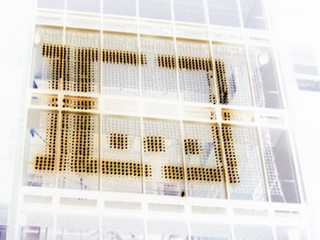
Young Rewired State Workshop @i-DAT 6-10/08/12

Young Rewired State Workshop @i-DAT 6-10/08/12

i-DAT is hosting a Young Rewired State workshop for young people, YRS alumni, Rewired State mentors and other volunteers 6th to the 10th August. The young peoples challenge is to build digital products: mobile and web, using at least one piece of open data. The participants will work with us for the week and then head up to Birmingham for the “Festival of Code 2012 where 500 kids sign up for coding and camping at YOUNG REWIRED STATES’s “Digital Olympics”.

i-DAT in Plymouth will play host to a number of talented youngsters in the South West.

Young Rewired State (YRS) announces today that its unique kids national coding event will take place this year from 6th – 12th August 2012. Now in its fourth year, YRS is attracting more children than ever with the aim of a record 500 participants registered to attend at 50 regional centres.
Explaining the aims of Young Rewired State, Founder, Emma Mulqueeny said; “Our primary focus is to find, foster and challenge the young children and teenagers who are driven to teach themselves how to code. We offer them the support that is missing from schools and colleges by providing mentors, broadening their horizons and introducing them to a network of like-minded peers.”

“The Festival of Code week is especially important as it allows the kids to realise that, as a geek, they are not alone and that coding is an important, promising and often lucrative career”.

Over the course of the week 50 organisations, large and small, around the country will act as host centres to local young people, YRS alumni, Rewired State mentors and other volunteers. From Monday to the Friday the centres will welcome kids from their region and challenge them to build digital products: mobile and web, using at least one piece of open government data. In Plymouth, the YRS center will be hosted by i-DAT.org, Plymouth University.

At the end of the week everyone piles on coaches, trains and cars to a central venue (top secret until nearer the event) where they will have a night of camping and coding, pizza and camaraderie. On the Saturday afternoon they will show what they have made to an audience of their peers, press, government and industry. Prizes are awarded and lives are changed.

All children can enter for free as long as they are aged 18 or under and have a rudimentary understanding of programming_ — although YRS will send out free resources in advance of the week for those who are unsure of their skills. YRS would particularly welcome more girl-coders. Sign up at http://www.youngrewiredstate.org.

Feedback from YRS 2011:

“He was buzzing yesterday! I’m not sure I’ve ever seen him so happy and fired up! I think he may have found ‘his people’. I can’t quite express to you just how brilliant it is to see him like this… he said you’re all just really cool and I think for the first time he felt pretty cool himself! I could barely drag him off the laptop last night to get him to eat!” — A parent

“Thank you very much for organising the event — I had an amazing time and was really grateful for the opportunities I had. I have already signed up to be a mentor next year since I really want to be a part of YRS as it is something I really believe it.” — an 18 year old YRS member

“Can’t tell you how much it would have helped me as an awkward teenager to find other kids who didn’t think being a geek was odd.” — A mentor

Devonport Open Event

Devonport Open Event


Devonport Guildhall, Ker Street, Devonport
http://goo.gl/hl10k
ALL WELCOME
Friday 3rd February 2012
2pm – 4pm


An one-off event showcasing a series of exploratory projects which
reveal invisible histories, memories and traces in and around Devonport. These projects embed and reveal information about the past, present and future. They explore the use of interactive mobile media, smart objects and projection to suggest new ways of experiencing, interacting and engaging with our built environment.
Background.
Fourty students from the Schools of Architecture and the Digital Art and Technology have worked to create interactive projects that address the following topic:
How can we bridge the gap between the digital and the physical, the material and the immaterial transforming the way we interact with the space around us?
Organisers:
Unit Inbetween, School of Architecture and i-Dat, University of Plymouth
with the kind support of RiO (Real Ideas Organisation)
Further information:
Katharine.willis@plymouth.ac.uk / Gianni.corino@plymouth.ac.uk
PDF flyer

Boundary Work I

Boundary Work I

i-DAT is collaborating with Boundary Work 1:
Boundary Work I is the first in a series of exhibitions designed to facilitate a survey of work that operates in the space between art and science and as such aims to encourage a dialogue between the sub-disciplines of these fields.
New Media Art can stimulate a mental image of a genre that breeds on techno-aesthetics alone. However, such a view short-changes the diversity of opportunities opened up in recent years through moves such as artists-in-labs programmes and the development of programming tools for artists. More significantly there is a growing public consciousness that evolving technologies hold significant implications for future human cultures. Such developments have assisted in the emergence of wet or living art, the growth of networked and intelligent artefacts, and a vision of the world enabled through new instrumentation designed for the investigation of macro or nano scale material environments. In addition to new genres, supported through access to new technologies, existing established practices in the arts have critiqued or been inspired by the technology and market driven actions in science.
So while science and art are often identified as opposing fields of knowledge technology can be seen as a common driving force in both. This gallery event attempts to draw activities in both of the worlds of art and science together in a dialogue where technology is the common agent.
The exhibition therefore is a representation of work that treads the boundary between art & design and science and an invitation to participate was extended to artists, designers, and researchers in practices particularly relating to science and/or technology.

http://www.transculturetek.com/boundarywork/index.php

MARCEL·LÍ ANTÚNEZ ROCA. NEW TECHNOLOGIES AND PERFORMING ARTS, TRANSDISCIPLINARY APPROACHES.

MARCEL·LÍ ANTÚNEZ ROCA. NEW TECHNOLOGIES AND PERFORMING ARTS, TRANSDISCIPLINARY APPROACHES.

MARCEL.Lì ANTUNEZ ROCA. NUOVE TECNOLOGIE E ARTI PERFORMATIVE, APPROCCI TRANSDISCIPLINARI

11 October 2010 – 12 October 2010

Laboratorio multimediale “Guido Quazza” – Palazzo Nuovo, Via Sant’Ottavio 20, Torino Accademia delle Belle Arti – Via dell’Accademia Albertina 6 Torino

Officine Sintetiche 2010 organises a study day and a workshop dedicated to the artist Marcel·lí Antúnez Roca (co-founder and ex-member of the Avant-garde theatre group La Fura dels Baus), in order to analyse theoretical approaches and artistic practices influenced by the use of the new information and communication technologies.

The Media and the New Media transform the art practice and generate new ways of expression, as a result of the interaction between technological material and artistic creativity. Technicians, artists, engineers and creators tend to work in closer and closer contact, and establish new procedures that are very strongly influenced by the nature and the particularities of the communication technologies.

The resulting new theater platform has in Marcel·lí Antúnez Roca one of its most important and international representatives. He brings together on the stage interactive video and sound, techno-body interfaces, sensors and network devices, thus enhancing a performativity that dis-unites the traditional boundaries of the artistic disciplines. Theatre, cinema and contemporary art get nowadays confronted on the new grounds of technological creativity.

11 OCTOBER STUDIES DAY

Free entrance. Laboratorio multimediale “Guido Quazza” – Palazzo Nuovo, Via Sant’Ottavio 20, Torino.

9.30-11.00 Opening session with Marcel·lí Antúnez Roca. Keynote speaker: Emma Zanella, Director of the MAGA-Museo Arte Gallarate, and Francesca Consoni, MAGA-Museo Arte Gallarate.

11.00-13.00 Round-table discussion on “MULTIMEDIA DRAMATURGY”. In the last two decades we have witnessed an increased development of the digital performances. Marcel·lí Antúnez is one of the pioneers of the new-dramaturgy that designs the performance and brings together interactive art and performance. In addition he has carried out a specific approach to narrative and drama through the lens of hypertext and multimedia. How does his practice challenge the modern and postmodern performance? Do we have to reconsider the concept of stage dramaturgy under the light of the interactive media? Is digital performance better seen as a continuation of the Avant-garde theatre or does it represent a rather unbridgeable rift?

Participants:
Antonio Pizzo – Università degli Studi di Torino
Steve Dixon – Brunel University of London
Lorenzo Mango – Università degli Studi di Napoli – L’Orientale
Federica Mazzocchi – Università degli Studi di Torino

15.00-17.00 Round-table discussion on “TECHNOLOGICAL PERFORMATIVITY AND CREATIVITY”. Nowadays creativity is deeply altered by the technological practices. The structural and practical features of the digital technologies strike and transform the performativity involved in the artistic creation. This represents a radical breaking point. What are the consequences of such a transformation? What are the new scenarios of technological performativity in the world of art?

Participants:
Tatiana Mazali – Università Telematica Internazionale Uninettuno di Roma
Gianni Corino – i-DAT / University of Plymouth
Mike Phillips – i-DAT / University of Plymouth
Alessandro Amaducci – Università degli Studi di Torino Domenico Quaranta – Accademia di Belle Arti di Brera, Milano

12 OTTOBRE

Accademia delle Belle Arti – Via dell’Accademia Albertina 6 Torino WORKSHOP, conducted by the artist Marcel·lí Antúnez Roca and his technical team, on the interactive systems applied in the performance COTRONE, which début will take place on November 14th at the Cavallerizza Reale, Maneggio di Torino.

It is compulsory to submit a participation request to tatiana.mazali@polito.it before October 7th.

Scientific Committee and organisers:

Tatiana Mazali, Federica Mazzocchi, Antonio Pizzo.

Information:
www.officinesintetiche.it

tatiana.mazali@polito.it

federica.mazzocchi@unito.it

antonio.pizzo@unito.it

Scale Electric… 19 & 20/07/2010

Scale Electric… 19 & 20/07/2010

[Scale Electric PDF]

Introduction…

The Scale Electric workshop (19 & 20/07/2010) couples the power of the Atomic Force Microscope to touch the infinitesimally small with the potential of the Full Dome environment to immerse participants in visualisations of the incomprehensibly big.

Throughout the last Century we were reintroduced to the idea of an invisible world. The development of sensing technologies allowed us to sense things in the world that we were unaware of (or maybe things we had just forgotten about?). The Scale Electric – the invisible ‘hertzian’ landscape was made accessible through instruments that could measure, record and broadcast our fears and desires. These instruments endow us with powers that in previous centuries would have been deemed ‘occult’ or ‘magic’.

Our Twenty First Century magic instruments mark a dramatic shift from the hegemony of the eye to a reliance on technologies that do our seeing for us – things so big, small or invisible that it takes a leap of faith to believe they are really there. Our view of the ‘real world’ is increasingly understood through images made of data, things that are measured and felt rather than seen. What we know and what we see is not the same thing – if you see what I mean?

Our ability to shift scales, from the smallest thing to the largest thing has been described as the ‘transcalar imaginary. The workshop will enable participants to touch the nano level and then immerse themselves within it through visualisations and sonifications.

Context:

Scale Electric extends a series of collaborative projects orbiting i-DAT’s research agenda. It builds on:

practical workshops to explore the application of novel and innovative technologies to creative practice (http://www.i-dat.org/2006-slidingscale/, http://www.i-dat.org/far-away-so-close/, http://www.i-dat.org/ahobartletti-dat/, etc)

projects with the Immersive Vision Theatre (a 40 seat 9m Full Dome digital projection system) a transdisciplinary instrument for the manifestation of material, immaterial and imaginary worlds – modelling, visualization, sonification and simulation.

research projects such as Arch-OS and Ecoid’s which stream real time data to facilitate insights into complex temporal architectural and ecological systems (http://www.arch-os.com/)

and more recently nano technology projects in collaboration with the Wolfson Nanotechnology Laboratory and John Curtin Gallery, Perth, WA – Art in the age of nanotechnology, 5/02 – 30/04/2010 (http://johncurtingallery.curtin.edu.au/)

Output generated by this workshop will contribute to the Ubiquity Journal Published in 2011 by Intellect. (http://ubiquityjournal.net/, http://www.intellectbooks.co.uk/journals/index/).

Scale Electric explores some of the ‘transcalar” (http://www.elumenati.com/products/TInarrative.html) conundrums that are increasingly intruding into our daily consciousness.

Schedule…

Monday 19/07/2010

10.00-10.15: Introductions, Briefing: Location – Babbage 213

10.15-10.30: Presentation 1: Prof Mike Phillips.

10.35-10.50: Presentation 2: Dr Chris Speed.

10.55-11.10: Presentation 3: Prof Genhua Pan.

11.15-11.30: Presentation 4: Pete Carss.

12.00-12.30: Tour of the AFM & IVT

12.30-13.30: Lunch

13.30-14.30: Production Planning: Location – Babbage 213

14.30-17.30: AFM Scanning: Location – The Wolfson Nanotechnology Laboratory,

Tuesday 20/07/2010

10.00-10.30: Briefing: Location Babbage 213

10.30-12.30: Project development AFM & IVT

12.30-13.30: Lunch

13.30-15.30: Project development AFM & IVT

15.30-17.30: IVT Manifestations

Process…

A: Experiencing Atoms:

The first practical session will utilise the AFM in the Wolfson Nanotechnology Laboratory to produce data and images. The materials themselves will be defined during the morning session. Participants will be asked to propose matter and associated narratives for examination.

B: Modelling Experience

Software templates will allow the interpretation and visualisation of the data gathered by the AFM. These visualisations will be hacked, tweaked and ultimately experienced within the Immersive Vision Theatre.

Project Team…

Pete Carss (http://www.i-dat.org/pete-carrs/)

Prof Genhua Pan (http://www.plymouth.ac.uk/staff/gpan)

Prof Mike Phillips (http://www.i-dat.org/mike-phillips/)

Dr Chris Speed (http://fields.eca.ac.uk/?page_id=65)

Supported by…

The Institute of Digital Art & Technology: [http://www.i-dat.org/]

Manifest Research Group

The Wolfson Nanotechnology Laboratory

The Centre for Media Art & Design Research

Ubiquity Journal


FULLDOME UK 2010 – 10th July Plymouth UK

FULLDOME UK 2010 – 10th July Plymouth UK


Welcome to FULLDOME UK 2010. A celebration of the FullDome experience, we present a day of screenings, presentations, discussions and perhaps some realtime performance. The event takes place at the Immersive Vision Theatre (IVT) based at the University of Plymouth on Saturday 10th July 2010 and runs from mid-day until late evening.
The event is free, but numbers are limited so please let us know your interest via email or by using the online form. We will be updating this site with more information on a regular basis, with more details of the screenings and guest speakers coming shortly – go to:
http://www.fulldome.org.uk/


Far Away So Close

Far Away So Close

Remote Sensing: Ecoid Workshop.

The Ecoid Workshop will be delivered by Luis Girao with support from Mike Phillips, Chris Saunders, Pete Carss, Musaab Garghouti.

“Idly, he wondered what these geometric forms really represented – he knew that only a few seconds earlier they had constituted an immediately familiar part of his everyday existence – but however he rearranged them spatially in his mind, or sought their associations, they still remained a random assembly of geometric forms.”

(Ballard, JG)

……………………………………………………………………………………………………………..

big screeni-500 Projection

i-DAT is developing a range of ‘Operating Systems’ which dynamically manifest data as experience and extend human perception. Arch-OS [www.arch-os.com], an ‘Operating System’ for contemporary architecture (‘software for buildings’) was the first i-DAT ‘OS’, developed to manifest the life of a building (currently being installed as the i-500 (www.i-500.org) in Perth Western Australia. More recently S-OS was released (Social Operating System) and follow up with Eco-OS, an ecological operating system.

Eco-OS explores ecologies. Eco-OS further develops the sensor model embedded in the Arch-OS system through the manufacture and distribution of networked environmental sensor devices. Intended as an enhancement of the Arch-OS system Eco-OS provides a new networked architecture for internal and external environments. Networked and location aware data gathered from within an environment can be transmitted within the system or to the Eco-OS server for processing.

Eco-OS.

Eco-OS collects data from an environment through the network of ecoids and provides the public, artists, engineers and scientists with a real time model of the environment. Eco-OS provides a range of networked environmental sensors (ecoids) for rural, urban, work and domestic environments. They extend the concept developed through the Arch-OS and i-500 projects by implementing specific sensors that transmit data to the Operating Systems Core Database. Eco-OS also enables the transmission of data back to the Eco-OS ecoids to support interaction with the environment (such as light shows and the transmission of audio/music in response to the network activity).

Descriptor:

Eco-OS: Eco-OS consists of: the Core database, which collects, stores and makes available data and the sensors – ecoids.

Eco-OS Core Database: is an extension of the established Arch-OS Core database. The Eco-OS Core collects the data transmitted to it by the ecoids. The data is parsed up and published through a range of flexible tools (flash, Max MSP, Processing, Java, etc), feeds (xml, rss) and web 2.0 streams, such as Twitter and Facebook, which allow artists, engineers and scientists to develop visualisations, sonifications (music) and interactive projects. Eco-OS can operate in passive mode, simply collecting data from the environment or interactive mode, feeding back recursively through the environment.

Ecoids: are sensor devices (small pods) that can be distributed through an environment (work place, domestic, urban or rural). The sensors allow environmental data to be collected from the immediate vicinity. The sensors can be connected together through the formation of Wireless Sensor Networks (WNS) that enable the coverage of an extensive territory (several kilometres). Each ecoid has a unique id and its location within a network can be triangulated giving its exact location. Consequently locative content can be tailored to a specific geographical area.

Ecoids consist of programmable (Processing, Java, etc) embedded technologies (Arduino, etc) and network technologies (Zigbee/Xbee, GPRS and Bluetooth). Designed to be attached to objects (architecture, trees, rocks, etc), free form (water-based, balloons, free standing) or as mobile sensors. They can be powered or draw power from the environment (solar).

Ecoids can also be used to produce content be receiving instructions from Eco-OS. Distributed performance can then be orchestrated across a large territory through light displays or acoustic renditions.

……………………………………………………………………………………………………………..

Timetable:

SMB302 is free from 11.00 to 17.00 on Friday 22nd, smb302 is free again on Monday 25th from 09.00 until 13.00 and SMB 303A if free on Tuesday from 09.00 until 17.00 hrs.

Friday 22/01/2010:

11.00 – 17.00: Introduction and Hardware Workshop. Smeaton 302.

Saturday 23/01/2010:

Team design work.

Monday 25/01/2010:

09.00-13.00 Further Hardware development. Smeaton 302

09.00-17.00 Software tools and packaging design. Software Babbage 213/221

Tuesday 26/01/2010:

Software and visualisation

Smeaton302 is available all day.

Wednesday: 27/01/2010

10-12. Final production and cleaning up. Babbage213

……………………………………………………………………………………………………………..

Teams:

Teams will consist of 4-5 people. A mix of hardware, software, visualisation and product design skills is encouraged. Ideally PhD, Masters, MPT and DAT students should constitute these teams.

……………………………………………………………………………………………………………..

Hardware:

Construction: The Smeaton labs will support the electronics development.

Kits consist of: Xbee Pro, Sensors (Humidity Sensor, Light Sensor, Temperature Sensor, Stretch sensor), Batteries, and connectors.

Please bring your laptops to allow better connectivity with the systems (University ports/restrictions etc can cause problems).

……………………………………………………………………………………………………………..

Software/plugins:

Xbee interface, php, Processing, Java, Flesh, VVVV, Quartz Composer, www.nodebox.net

http://www.arch-os.com/downloads.html

……………………………………………………………………………………………………………..

Production Phases:

Construction: electronics workshop developing the xbee hardware systems.

Interface: connecting the xbee to a PC.

Network: Mesh network of xbee ecoids.

Broadcast: xml feeds from the xbee network to the internet.

Visualisation: generatibg visualisations from the xbee feed.

……………………………………………………………………………………………………………..

Tools:

Mobile: rss feeds, java apps, pachube for iPhone.

Dome: 3D Studio max, Blender, Unity 3D, Quartz Composer (and audio).

GreenScreen. Greenscreen templates.

Web: Pachube.com, etc…

……………………………………………………………………………………………………………..

Collaborators:

These individuals and organisations will be building on this Far Away So Close workshop. There are of opportunities for involvement in these collaborations if you would like to taker this work further.

1: Dr Chris Speed: Edinburgh College of Art: http://ubiquityjournal.net/

Check out the PHYLOGENY WORKSHOP. SAT 20 – SUN 21 FEB 2010

2: Centre for Contemporary Art and the Natural World. www.ccanw.co.uk

3: North Devon Biosphere Reserve. http://www.northdevonbiosphere.org.uk/

4: James Moore. University College Falmouth. http://www.falmouth.ac.uk/

5: Aichi Prefectural University of Fine Arts and Music, Nagoya, Japan. And festival: http://setouchi-artfest.jp/

……………………………………………………………………………………………………………..

Arch-OS – VILLAGE SCREEN

Arch-OS – VILLAGE SCREEN

big screen

Arch-OS – VILLAGE SCREEN @ The Glastonbury Festival Big Screens

Aqeel Akbar, Immersive Media Assistant at the Immersive Vision Theatre was selected to join the team of seven artists working on site at the festival. The dynamic visualisations shown on the screen included the Quartz Composer real time Arch-OS data visualization developed in the i-DAT/AHO/Bartlett workshop.

Aqeel's Visualisation

“The Village Screen project was a unique collaboration led by the region’s 2012 Creative Programmer, Glastonbury Festival, Team South West and Relays (Legacy Trust UK programme), and including the UK’s network of Creative Programmers, screen agencies and the BBC’s Live Sites team, brings the Village Screen to Glastonbury for the first time this year. The screens will be used to showcase the work of some of the best new filmmaking talent, digital artists, VJs and games developers from the region and the UK.

The 25m2 screens (there are two of them, back- to- back) will broadcast a mix of short films, archive footage, gaming sessions, classic pop and highlights of the BBC’s coverage of the Festival from 10.00am to 3.00am every day.

Village Screen was coordinated by Richard Crowe, London 2012 Creative Programmer.

e: richard.crowe@london2012.com

www.london2012.com/culture

www.artscouncil.org.uk

AHO+BARTLETT=i-DAT

AHO+BARTLETT=i-DAT

Arch-OS Workshop
AHO+BARTLETT= i-DAT:  A trans-disciplinary research workshop on Arch-OS

25th – 27th February 2009
A trans-disciplinary research workshop on Arch-OS:  Architectural ecologies: from aesthetics to behaviour, an interdisciplinary approach to affecting the relationships and interactions between inhabitants and their architectural environment. With:
Advanced Architectural Design, AHO Oslo School of Architecture and Design, Norway: http://www.aho.no/en/
&
A.V.A.T.A.R, Bartlett School of Architecture, University College London, UK: http://www.avatarlondon.org/
Workshop details:
This workshop will experiment with and forecast potential future use, impact and value of using data generated by a building and its inhabitants, to recursively influence behaviour, creating a symbiotic ecology with a potential greater environmental awareness. Through an interdisciplinary approach it will encourage the development of an organic list of solutions or potential methodologies for building design based on the study of the main factors: behaviour, data and interaction. The resultant hybrid construct has the potential to expand and evolve our physical and conceptual space, and behaviours and interaction within these.

Fallout Boys and Cannon Girls

Fallout Boys and Cannon Girls


Fallout Boys and Cannon Girls
Workshops for young people aged 13 – 16.
Plymouth Arts Center, Saturday’s 27 September, 4 October & 11 October 11am – 4pm.
Free

Join artist and writer Mark Greenwood, working in association with i-DAT and Plymouth Arts Centre, for three days of creativity linked to the exhibition Kings Island by Tom Dale. During these workshops participants will be using writing, sculpture and objects, as Mark leads an investigation into local myths, monuments and celebrities. The resulting work that will be exhibited during the Plymouth Respect Festival on i-DAT’s 10m x 5m low resolution Urban Screen.
Advanced booking is essential and you can book for one or both workshops.
Contact Plymouth Arts Centre on: 01752 206 114 or info@plymouthartscentre.org
Artist’s Statement:
Mark Greenwood is a performance artist/ writer originally from Newcastle but now based in Plymouth. He has presented work across the U.K, Europe and the United States over the last ten years. Utilising indefinite durational practice as an art form, Greenwood’s interests lie in writing as a socio-physiological practice and the interrelations between gender, memory, cultural location and identity. Parallel to the generation of poetic texts through experimental procedures that seek to subvert and resist the structures of hegemonic discourse, Greenwood incorporates the ideology of gambling and chance in his current work.
As well as collaborating with London artist Liam Yeates through the medium of film and video, Mark regularly curates the Red Ape Language Project at Plymouth Arts Centre and contributes writing for a number of on-line art journals including AN Interface, Writing from Live Art and Total Theatre. He recently completed an MA in Performance Writing at Dartington College of Arts and is currently researching a doctorate in Fine Art at Kingston University in London.