TUE, 18 OCT 2016 AT 08:30 http://www.venturefest-sw.co.uk/
i-DAT has developed a Quorum model for real-time data feeds at Ventruefest.
Running from a networked Raspberry Pi vision sensors and twitter feeds the Quorum Fest tracks human activity and communication around the event through a dynamic 3D datascape.
The inaugural Venturefest South West, at Sandy Park Exeter, is a showcase of the cutting edge innovation and entrepreneurship coming out of Devon, Cornwall and Somerset. The event will bring hundreds of entrepreneurs and businesses together with innovators and academics to fuse business ideas with novel research and opportunities for funding.
The day will see speakers and masterclasses from the world of investment, market leaders sharing their insight plus success stories from trailblazing entrepreneurs. Venturefest South West promises to celebrate the region’s most exciting innovators as well as facilitate new interactions, collaboration and investment.
Murmuration was one of the outcomes from the E / M / D / L – EUROPEAN MOBILE DOME LAB for Artistic Research (http://www.emdl.eu/) partnership of European and Canadian cultural organisations funded by EU Culture Program. This post contains information and documentation on this project component.
murmuration:
1: the act of murmuring: the utterance of low, indistinct, continuous whisper of sounds or complaining noises, a mutter, the murmur of waves.
2: an abnormal whooshing sound emanating from the heart.
3: the mass cloud like flocking of starlings.
Late Middle English: from French, from Latin murmuratio, from murmurare 'to murmur'. A collective noun dating from the late C15th.
E/M/D/L Context:
E/M/D/L presents: Liminal Spaces, Dream Collider, and Murmuration, the culmination of a EU funded collaboration between Canadian and European partners. This research project was carried out through eight international residencies and is presented in the Satosphere of Montreal’s Society for Arts and Technology (SAT). Articulated through the fulldome environment as an instrument to explore transdisciplinary forms of artistic expression, these experiments oscillate between performance, interactive installation and immersive event.
Liminal Spaces:
We are made up of layers: the physical ones of skin and tissues, but also the intangible ones of history, tradition, images, and words. In the strata of sensations and accumulations of meanings, what strategies can be used to subjectivate such heterogeneous materials and find coherence among them? Where should borders be porous and where should they be strengthened? How can we let them breathe and allow them to change their contours? How to inhabit the threshold between two states, conditions, or regions – the transitory, the indeterminate? Sheltering layers of performance, interactivity and image, sound and text, the dome becomes the intermediary membrane between inside and outside, as it is explored and pierced through at the limit of palpable space. Organizations: Digital Art Department, Vienna, Austria / kondition pluriel, Montreal, Canada / Trans-Media Akademie, Dresden, Germany Participants/Collaborators: David Campbell, Carla Chan, Matthias Härtig, Johannes Hucek, Martin Kusch, Marilou Lépine, Armando Menicacci, Marie-Claude Poulin, Audrey Rochette, Ruth Schnell, Alexandre St-Onge, Nikola Tasic
Dream Collider:
Through an interactive journey in the narrated dreamland of crystallized daily scenes, Dream Collider questions the intertwined states of diverging oneiric ideas, the raise and collapse of these subconscious mind constructions, and the iterative processes leading the exploration of self-generated worlds. Initially created with the intent of expressing grammatical results issued from artistic research in the field of immersion, this dome installation highlights the relation and cohesion of physical and virtual spaces, and the place of the user as a living presence in between the layers of this multi-perspective narrative. Abstract collisions, premonitory visions or interneuronal recovery fluctuations; dreams have always been intriguing and are haunting our nights’ and days’ perceptions. Organizations: Society for Arts and Technology [SAT], Montreal, Canada. Participants/Collaborators: Derek deBlois, Bruno Colpron, Sébastien Gravel, Jean Ranger, Dominic St-Amant and Louis-Philippe St-Arnault.
Murmuration
Murmuration [muttering of low, indistinct, whispers / abnormal heart sounds / mass cloud like flocking] is a series of trans-scalar and recursive transitions from the imaginary to infinity: i∞. Constructed from bio-imaging technologies and modeled fractured architectures, the low-poly-aesthetic of murmuration navigates its audience through playful interaction with particle swarms of digital detritus and real-time manipulation of virtual/physical audio-visual objects and the environmental experiences afforded by their continuously transforming arrangement. Algorithms of repulsion and attraction maintain the cohesion of nano/molecular landscapes harvested by atomic force. Bio-forms, like artificial organs, and boney architectures, temporarily seem to come to life, create cavities and cavernous voids, conjuring uncanny atmospheres of elation, intrigue and awe. Organizations:
Laboratory of New Technologies in Communication, Education and the Mass Media (UoA NTLab), Athens, Greece / i-DAT (Institute of Digital Art and Technology), Plymouth, U.K. Participants/Collaborators:
Dimitris Charitos, Luke Christison, Phil Mayer, Cameron Micallef, Lee Nutbean, Alexandre St-Onge, Mike Phillips, Olivier Rhéaume, Haris Rizopoulos, Ben Stern, Iouliani Theona, Penny Papageorgopoulou
Phage shell fabrication: Iain Griffin.
[From the published SAT event info pamphlet]
[Time lapse video by SAT]
murmurationis a series of trans-scalar and recursive transitions from the imaginary to infinity : i∞
Swarming ‘Phage’ [particles/fragments/epithelium/boids] traverse the three domains, providing a focus for audience interaction and navigation. A murmuratiuon of Phage sweep noisily through the hollow space. Access to each domain is unlocked by interactions through the physical remains of fallen Phage. This detritus (control and feedback devices) is scattered around the floor of the SATosphere.
The Trans-scalar recursive spaces are reminiscent of biological architectures, planes and volumes reconstructed, nano/molecular landscapes harvested from Atomic Force Microscopy, skin from surface scans and deep structures and cavities from MRI scans. Radical shifts in perspective between these states of scale, the vast cavernous spaces and towering structures create uncanny atmospheres of elation, intrigue and awe.
Micro architectures emerge as structural entities hovering the void, nestling between abstract biological forms, like manufactured organs. Their structures are pliable and noisy, wailing and screeching like dysfunctional machinery. They dominate the view until they absorb the viewer. Now the inside out their forms become totally immersive to the point of transition back into the void.
Other larger scale assemblages of fractured phage-like objects, barely held together by semi-transparent scaffoldings, afford playful interaction with members of the audience and as they rotate and translate in unpredictable ways, they emit sounds and after a while are ‘ελκονται απο την αρνητική βαρύτητα and move onto the ominous global kelyfos enclosure of the “world”. Ultimately, the assemblages are dismantled to reveal the recursiveness of the movement within/through these consecutive worlds; one world nested into the other and revealing themselves to the audience in a recursive sequence..
Fluttering and buzzing in fits and starts of attraction and repulsion, the swarming Phage slowly become the thing they were once part of, fragments now form the whole.
The swarming Phage begin to converge, forming new figurative structures which congeal and begin to rise, escheresque from the abyss.
The Trans-scalar recursive spaces are:
Physical Phage and their inner spaces: detritus scattered across the floor
The Phage as a particle swarm… volume and the algorithms of repulsion and attraction – separation, alignment and cohesion. Tumble blindly…
Bio-architectures: nano/molecular landscapes harvested from Atomic Force Microscopy…
skin from surface scans… deep structures/cavities – MRI scans: vast cavernous voidsand towering structures conjuring uncanny atmospheres.
Fractured architectures… interactive and noisy, reconfiguring fractured forms of diverse scales, anchored to the seemingly existent scaffoldings fluctuating between inner and outer spaces.
Converged Phage Figures… the swarming Page coalesce into rising figures in partial transition partial form.
The Rise: Dante/Escher-esque Concentric Circles of…. Part evolution, part escape, the slow parallax rise through the reformed bio-architectures, spiral across the universe.
murmuration builds on the research themes explored through the EMDL project:
From the myriad experiments and technical investigations the following instances provide a non-exclusive substrate for murmuration.
Trans-scalar navigation and experiences
Recursive spaces and transitioning between them
A sense of human scale and perspective
Manipulating the dome surface
Emphasising or ignoring the surface of the dome as a canvas for representation
Direct manipulation of virtual objects
Interaction with fulldome elements
Physical and virtual objects
Audience participation
3D sonic spaces
Dialogues between visual & auditory object manipulation (visual music perspective)
Nano-macro scanning
Flocking and particle spaces
Low-poly-aesthetic
Phage:
A particular output of this collaboration was the development of ‘Phage’ technologies, collaborative physical instruments that allow the manipulation of virtual objects within the projected dome space. These technologies are now flowing out of the Fulldome space and are being deployed within cultural and heritage institutions as a means of accessing new knowledge from museum artefacts, enhancing audience engagement and constructing a shared heritage through crowd participation.
Each physical Phage has its own characteristics and behaviours they: illuminate, listen, mutter, shudder, reveal inner recursive domains.
They are instruments for connecting across the membrane of the fulldome into dimensions beyond. This reach beyond the dome surface cultivates navigation through the recursive spaces and interaction with the dynamic evolving architectures. In the case of one of the environments, they are instruments for controlling the translation, rotation and corresponding evolution of the audiovisual fractured objects which surround the audience in the dome.
The design of each Phage is based around a set of parameters and personalities:
Phage: Weishaupt – the illuminated one.
Weishaupt’s radiant DNA seeps across the other Phage, providing general enlightenment. Audio responsive pulsating optical communication. Glow. Technical: Internal lights and LED’s create a glow which responds to sound levels. Reference: Weishaupt was the founder of the original Bavarian Illuminati.
Phage: Orare – the confessor.
Orare listens, the confessions of others feed the environment, the murmuration of crowds. Technical: Bluetooth transmission of recordings to the mixer. Reference: Orare is latin for worship but also the origin of the oratory or confessional.
Phage: Uto – the muttering one.
Uto the muttering oracle, the babbling Phage. Technical: Embedded speaker, possibly live audio feed or looped recordings. Reference: Uto, the first Oracle (Egyptian).
Phage: Raptus – Phase state of transition.
Raptus shudders under the stress of a constant state of transition, phasing between dimensions, neither here nor there… Technical: constant variable vibrations and gyroscope . Reference: Raptus, root of Rapture, Latin for carrying off.
Phage: Sanctorum – the hollow one.
Sanctorum, “my god, it’s full of stars” – the inner sanctum, a portal to another world, the recursive space physically bound in stasis inside the guts of the Phage architecture. Technical: Hollow, recursive space with embedded screen, illuminated and animated. Reference: Sacntorum, Latin for holy place…
Transcalar Transitions:
Central to the navigation of these trans-scalar recursive architectures is the transitions between states, domains, architectures and sequences.
These include the shifts between the:
Phage swarms as they flock around the architecture. The start of murmuration, from the darkness and the fall of the physical Phage to the floor.
Bio-architectures: AFM, surface scans and MRI scans. The spatial shifts that take place between these spaces and surfaces.
Micro-macro architectures: to/from the bio-architectures and inside/outside. The transition from the space which contains them to view and interact with them but also the transition inside.
The Converged Phage Figures, from the Phage swarm to the figure. How the Phage swarm to form the bodies and how low polygon they remain…
The Rise: Dante/Escher-esque Concentric Circles. The transition from either the micro-macro architectures or the Bio-architectures to the
circles of the Rise.
Audio:
The sounds of murmuration are complex, interactive and 3dimensional. They are attached to swarm Phage, located in physical Phage and anchored in the dimensional spaces of the bio and micro-macro architectures. They include:
murmuration of the Phage swarm
acoustics of each bio-architecture, 3D and distributed in various structures
processing of the live recordings of Phage Orare – the confessor
the sounds from Phage Uto – the muttering one emited from its bowls
each transition (see #5: murmuration)
the acoustics of the fractured architectures
the interactive sounds of the fractured architectures
the sounds of the Phage swarm convergence into the Rise figures
the environmental acoustics of the Rise circles.
With thanks to the MRI Department, Derriford Hospital, Plymouth Hospitals NHS Trust for the full body MRI Scan.
A technological fusion of interactive light and sound, this dynamic data driven artwork asks audiences to consider the data they generate and the algorithms that increasingly influence their behaviour. This Is Where We Are offers a glimpse into a future where we work rest and play with and through algorithms.◯ ◯ ◯
[panel color=”#000000″ border=”1px solid #b7b6b6″ shadow=”1px 0px 1px #eeeeee” radius=”5″ target=”blank”]This Is Where We Are (TIWWA) is an immersive and interactive algorithmic sculpture fuelled by the data we collectively generate.[/panel]
This Is Where We Are (TIWWA) is an immersive and interactive algorithmic sculpture fuelled by the data we collectively generate. Engage, interact and play with the swarm algorithms that generate this dynamic digital artwork created by i-DAT working with Tate Collective London for the opening of the new Tate Modern building on the 17 – 19 June 2016.
Data is created all around us – from our interactions with social media to our movements through a city. TIWWA invites audiences into a sculptural space where they can see, hear and interact with the data of our everyday lives, contributing to an evolving art work which questions the influence of algorithms on our behaviour.
The artwork explored:
Behavioural data: individual and collective movement and touch. Sensors will capture our collective movements through the studio space.
Social media data: Hashtags #Tatemodern will help collect the ideas and sentiment of present and distant audiences.
Environmental data: Temperature, Co2, Humidity and Energy Consumption, captured by the Buildings Energy Management System, representing the life of the building and the collective behaviour of its inhabitants.
Taking over the North East corner of Tate Exchange in the new Switch House building, this evolving piece will immerse people in a collective algorithmic experience, teasing them to contribute to the swarm behaviour and sing the body electric.
[/panel]
[testimonial name=”Dr Rebecca Sinker, Convenor of Digital Learning at the Tate.”]”TIWWA was a great opportunity to make a piece of work that actively engages with audiences. But there is also a kind of ecology of creativity around a piece of work like this that involves not only artists but computer programmers, architects, roboticists and sonic artists, it’s really interesting mix of skills and indicates a way of making art in the future.”[/testimonial]
[panel color=”#000000″ border=”1px solid #b7b6b6″ shadow=”1px 0px 1px #eeeeee” radius=”5″ target=”blank”]For more information please go to the TIWWA and the Quorum website. The interdisciplinary artists, scientists and technologists collaborating on the project: i-DAT: Birgitte Aga, Michael Blow, Guido Bugmann, Luke Christenson, Mathew Emmett, Chris Hunt, Simon Lock, Cameron Micallef, Lee Nutbean, Mike Phillips, Michael Straeubig, Tate Collective London: Ernest, Tara, Tanya, Tate: Jen Aarvold, Tate Collectives Producer, Tate Digital Rebecca Sinker, Digital Learning Convenor, Tate Learning Intercity: Nathan Gale, William Hibberd, Trystan Thompson, TIWWA is made possible through generous support from:
The Book of the Law is written and Concealed.1Aleister Crowley
Liber Legis – AIWASS v2.0 is an encapsulated Artificial Neural Network, a self-contained computational system that performs a set of simple coded actions.
It sits and waits for an audience, on seeing a viewer it decodes and translates the ‘Liber Legis’ as a visual stream and spoken code.
On the completion of its performance it destroys the code and waits for the next viewer.
Thorough the act of translating the source code, its utterance to the viewer and its ultimate destruction, Liber Legis – AIWASS v2.0 fulfils its purpose and auto-destruct protocol encoded in the original text.
Sample Liber Legis text in BASE64: QWl3YXNz – DQpBbA0KKExpYmVyIExlZ2lzKVRIRSBCT09LIE9GIFRIRSBMQVcNClNVQiBGSUdVUkEgWFhYSQ0KQVMgREVMSVZFUkVEIEJZDQo5MyAtIEFJV0FTUyAtIDQxOA0KVE8NCkFOS1kwRjBOLUtIT05TVQ0KVEhFIFBSSUVTVCBPRiBUSEUgUFJJTkNFUw0KV0hPIElTDQo2NjYNCkRvIHdoYXQgdGhvdSB3aWx0IHNoYWxsIGJlIHRoZSB3aG9sZSBvZiB0aGUgTGF3Lg0KVGhlIHN0dWR5IG9mIHRoaXMgQm9vayBpcyB…
Liber Legis – AIWASS v2.0 is a re-imagining and digital manifestation of the utterances of Aiwass, a higher entity that visited Aleister Crowley in Cairo in April 1904. By all accounts, Aiwass dictated the text (see below) to Crowley as a protocol for ascending to a new stage of human evolution. The work ponders the possibility that the attainment of this evolutionary state is now closely interwoven with the emergence of artificial entities – alien intelligences that we conjured into existence and fed on with our behaviour.
Liber Legis – AIWASS v2.0 consists of a motherboard, screen, face recognition system and simple Artificial Neural Network to perform its translations. The mini-computer is contained within a Phage2 like structure that has been algorithmically modelled from the Liber Legis source code.
References:
1: Crowley, A (1904). The Book Of The Law. York Beach, Me. Samuel Weiser, 1976. Pp 49.
2: i-DAT Phage Technology: http://i-dat.org/phage-technology
Many thanks to Chris Hunt for the Pi.
Exhibited Palace of Arts, Cairo at Cairotronica, a Symposium of Electronic and New Media arts in Cairo, Egypt. 03-10/05/2016.
Original Source Code:
(Liber Legis)
THE BOOK OF THE LAW
SUB FIGURA XXXI
AS DELIVERED BY
93 - AIWASS - 418
TO
ANKY0F0N-KHONSU
THE PRIEST OF THE PRINCES
WHO IS
666
Do what thou wilt shall be the whole of the Law.
The study of this Book is forbidden. It is wise to destroy this copy after the first reading.
Whosoever disregards this does so at his own risk and peril. These are most dire.
Those who discuss the contents of this Book are to be shunned by all, as centres of pestilence.
All questions of the Law are to be decided only by appeal to my writings, each for himself.
There is no law beyond Do what thou wilt.
Love is the law, love under will.
The priest of the princes,
ANKH-F-N-KHONSU
THE COMMENT
Chapter I
I,1: Had! The manifestation of Nuit.
I,2: The unveiling of the company of heaven.
I,3: Every man and every woman is a star.
I,4: Every number is infinite; there is no difference.
I,5: Help me, o warrior lord of Thebes, in my unveiling before the Children of men!
I,6: Be thou Hadit, my secret centre, my heart & my tongue!
I,7: Behold! it is revealed by Aiwass the minister of Hoor-paar-kraat.
I,8: The Khabs is in the Khu, not the Khu in the Khabs.
I,9: Worship then the Khabs, and behold my light shed over you!
10: Let my servants be few & secret: they shall rule the many & the known.
I,11: These are fools that men adore; both their Gods & their men are fools.
I,12: Come forth, o children, under the stars, & take your fill of love!
I,13: I am above you and in you. My ecstasy is in yours. My joy is to see your joy.
I,14:
Above, the gemméd azure is
The naked splendour of Nuit;
She bends in ecstasy to kiss
The secret ardours of Hadit.
The winged globe,the starry blue,
Are mine, O Ankh-af-na-khonsu!
I,15: Now ye shall know that the chosen priest & apostle of infinite space is the prince-priest the Beast; and
in his woman called the Scarlet Woman is all power given. They shall gather my children into their fold: they
shall bring the glory of the stars into the hearts of men.
I,16: For he is ever a sun, and she a moon. But to him is the winged secret flame, and to her the stooping
starlight.
I,17: But ye are not so chosen.
I,18: Burn upon their brows, o splendrous serpent!
I,19: O azure-lidded woman, bend upon them!
I,20: The key of the rituals is in the secret word which I have given unto him.
I,21: With the God & the Adorer I am nothing: they do not see me. They are as upon the earth; I am Heaven,
and there is no other God than me, and my lord Hadit.
I,22: Now, therefore, I am known to ye by my name Nuit, and to him by a secret name which I will give him
when at last he knoweth me. Since I am Infinite Space, and the Infinite Stars thereof, do ye also thus. Bind
nothing! Let there be no difference made among you between any one thing & any other thing; for thereby
there cometh hurt.
I,23: But whoso availeth in this, let him be the chief of all!
I,24: I am Nuit, and my word is six and fifty.
I,25: Divide, add, multiply, and understand.
I,26: Then saith the prophet and slave of the beauteous one: Who am I, and what shall be the sign? So she
answered him, bending down, a lambent flame of blue, all-touching, all penetrant, her lovely hands upon
the black earth, & her lithe body arched for love, and her soft feet not hurting the little flowers: Thou knowest!
And the sign shall be my ecstasy, the consciousness of the continuity of existence, the omnipresence
of my body.
I,27: Then the priest answered & said unto the Queen of Space, kissing her lovely brows, and the dew of
her light bathing his whole body in a sweet-smelling perfume of sweat: O Nuit, continuous one of Heaven,
let it be ever thus; that men speak not of Thee as One but as None; and let them speak not of thee at all,
since thou art continuous!
I,28: None, breathed the light, faint & faery, of the stars, and two.
I,29: For I am divided for love’s sake, for the chance of union.
I,30: This is the creation of the world, that the pain of division is as nothing, and the joy of dissolution all.
I,31: For these fools of men and their woes care not thou at all! They feel little; what is, is balanced by weak
joys; but ye are my chosen ones.
I,32: Obey my prophet! follow out the ordeals of my knowledge! seek me only! Then the joys of my love will
redeem ye from all pain. This is so: I swear it by the vault of my body; by my sacred heart and tongue; by all
I can give, by all I desire of ye all.
I,33: Then the priest fell into a deep trance or swoon, & said unto the Queen of Heaven; Write unto us the
ordeals; write unto us the rituals; write unto us the law!
I,34: But she said: the ordeals I write not: the rituals shall be half known and half concealed: the Law is for
all.
I,35: This that thou writest is the threefold Book of Law.
I,36: My scribe Ankh-af-na-khonsu, the priest of the princes, shall not in one letter change this book; but lest
there be folly, he shall comment thereupon by the wisdom of Ra-Hoor-Khu-it.
I,37: Also the mantras and spells; the obeah and the wanga; the work of the wand and the work of the
sword; these he shall learn and teach.
I,38: He must teach; but he may make severe the ordeals.
I,39: The word of the Law is Thelema.*
* Greek letters in MS: theta-epsilon-lambda-eta-mu-alpha.
I,40: Who calls us Thelemites will do no wrong, if he look but close into the word. For there are therein
Three Grades, the Hermit, and the Lover, and the man of Earth. Do what thou wilt shall be the whole of the
Law.
I,41: The word of Sin is Restriction. O man! refuse not thy wife, if she will! O lover, if thou wilt, depart! There
is no bond that can unite the divided but love: all else is a curse. Accursed! Accursed be it to the aeons!
Hell.
I,42: Let it be that state of manyhood bound and loathing. So with thy all; thou hast no right but to do thy
will.
I,43: Do that, and no other shall say nay.
I,44: For pure will, unassuaged of purpose, delivered from the lust of result, is every way perfect.
I,45: The Perfect and the Perfect are one Perfect and not two; nay, are none!
I,46: Nothing is a secret key of this law. Sixty-one the Jews call it; I call it eight, eighty, four hundred & eighteen.
I,47: But they have the half: unite by thine art so that all disappear.
I,48: My prophet is a fool with his one, one, one; are not they the Ox, and none by the Book?
I,49: Abrogate are all rituals, all ordeals, all words and signs. Ra-Hoor-Khuit hath taken his seat in the East
at the Equinox of the Gods; and let Asar be with Isa, who also are one. But they are not of me. Let Asar be
the adorant, Isa the sufferer; Hoor in his secret name and splendour is the Lord initiating.
I,50: There is a word to say about the Hierophantic task. Behold! there are three ordeals in one, and it may
be given in three ways. The gross must pass through fire; let the fine be tried in intellect, and the lofty chosen
ones in the highest. Thus ye have star & star, system & system; let not one know well the other!
I,51: There are four gates to one palace; the floor of that palace is of silver and gold; lapis lazuli & jasper
are there; and all rare scents; jasmine & rose, and the emblems of death. Let him enter in turn or at once
the four gates; let him stand on the floor of the palace. Will he not sink? Amn. Ho! warrior, if thy servant
sink? But there are means and means. Be goodly therefore: dress ye all in fine apparel; eat rich foods and
drink sweet wines and wines that foam! Also, take your will and fill of love as ye will, when, where, and with
whom ye will! But always unto me.
I,52: If this be not aright; if ye confound the space-marks, saying: They are one; or saying, They are many;
if the ritual be not ever unto me: then expect the direful judgments of Ra Hoor Khuit!
I,53: This shall regenerate the world, the little world my sister, my heart & my tongue, unto whom I send this
kiss. Also, o scribe and prophet, though thou be of the princes, it shall not assuage thee nor absolve thee.
But ecstasy be thine and joy of earth: ever To me! To me!
I,54: Change not as much as the style of a letter; for behold! thou, o prophet, shalt not behold all these mysteries
hidden therein.
I,55: The child of thy bowels, he shall behold them.
I,56: Expect him n ot from the East, nor from the West; for from no expected house cometh that child. Aum!
All words are sacred and all prophets true; save only that they understand a little; solve the first half of the
equation, leave the second unattacked. But thou hast all in the clear light, and some, though not all, in the
dark.
I,57: Invoke me under my stars! Love is the law, love under will. Nor let the fools mistake love; for there are
love and love. There is the dove, and there is the serpent. Choose ye well! He, my prophet, hath chosen,
knowing the law of the fortress, and the great mystery of the House of God. All these old letters of my Book
are aright; but * is not the Star. This also is secret: my prophet shall reveal it to the wise.
* In MS, the symbol found here is usually interpreted as the Hebrew letter Tzaddi.
I,58: I give unimaginable joys on earth: certainty, not faith, while in life, upon death; peace unutterable, rest,
ecstasy; nor do I demand aught in sacrifice.
I,59: My incense is of resinous woods & gums; and there is no blood therein: because of my hair the trees
of Eternity.
I,60: My number is 11, as all their numbers who are of us. The Five Pointed Star, with a Circle in the Middle,
& the circle is Red. My colour is black to the blind, but the blue & gold are seen of the seeing. Also I have a
secret glory for them that love me.
I,61: But to love me is better than all things: if under the night-stars in the desert thou presently burnest
mine incense before me, invoking me with a pure heart, and the Serpent flame therein, thou shalt come
a little to lie in my bosom. For one kiss wilt thou then be willing to give all; but whoso gives one particle of
dust shall lose all in that hour. Ye shall gather goods and store of women and spices; ye shall wear rich
jewels; ye shall exceed the nations of the Earth in splendour & pride; but always in the love of me, and so
shall ye come to my joy. I charge you earnestly to come before me in a single robe, and covered with a rich
headdress. I love you! I yearn to you! Pale or purple, veiled or voluptuous, I who am all pleasure and purple,
and drunkenness of the innermost sense, desire you. Put on the wings, and arouse the coiled splendour
within you: come unto me!
I,62: At all my meetings with you shall the priestess say-and her eyes shall burn with desire as she stands
bare and rejoicing in my secret temple-To me! To me! calling forth the flame of the hearts of all in her lovechant.
I,63: Sing the rapturous love-song unto me! Burn to me perfumes! Wear to me jewels! Drink to me, for I
love you! I love you!
I,64: I am the blue-lidded daughter of Sunset; I am the naked brilliance of the voluptuous night-sky.
I,65: To me! To me!
I,66: The Manifestation of Nuit is at an end.
Chapter II
II,1: Nu! the hiding of Hadit.
II,2: Come! all ye, and learn the secret that hath not yet been revealed. I, Hadit, am the complement of Nu,
my bride. I am not extended, and Khabs is the name of my House.
II,3: In the sphere I am everywhere the centre, as she, the circumference, is nowhere found.
II,4: Yet she shall be known & I never.
II,5: Behold! the rituals of the old time are black. Let the evil ones be cast away; let the good ones be
purged by the prophet! Then shall this Knowledge go aright.
II,6: I am the flame that burns in every heart of man, and in the core of every star. I am Life, and the giver of
Life, yet therefore is the knowledge of me the knowledge of death.
II,7: I am the Magician and the Exorcist. I am the axle of the wheel, and the cube in the circle. “Come unto
me” is a foolish word: for it is I that go.
II,8: Who worshipped Heru-pa-kraath have worshipped me; ill, for I am the worshipper.
II,9: Remember all ye that existence is pure joy; that all the sorrows are but as shadows; they pass & are
done; but there is that which remains.
II,10: O prophet! thou hast ill will to learn this writing.
II,11: I see thee hate the hand & the pen; but I am stronger.
II,12: Because of me in Thee which thou knewest not.
II,13: for why? Because thou wast the knower, and me.
II,14: Now let there be a veiling of this shrine: now let the light devour men and eat them up with blindness!
II,15: For I am perfect, being Not; and my number is nine by the fools; but with the just I am eight, and one
in eight: Which is vital, for I am none indeed. The Empress and the King are not of me; for there is a further
secret.
II,16: I am the Empress & the Hierophant. Thus eleven, as my bride is eleven.
II,17:
Hear me, ye people of sighing!
The sorrows of pain and regret
Are left to the dead and the dying,
The folk that not know me as yet.
II,18: These are dead, these fellows; they feel not. We are not for the poor and sad: the lords of the earth
are our kinsfolk.
II,19: Is a God to live in a dog? No! but the highest are of us. They shall rejoice, our chosen: who sorroweth
is not of us.
II,20: Beauty and strength, leaping laughter and delicious languor, force and fire, are of us.
II,21: We have nothing with the outcast and the unfit: let them die in their misery. For they feel not. Compassion
is the vice of kings: stamp down the wretched & the weak: this is the law of the strong: this is our law
and the joy of the world. Think not, o king, upon that lie: That Thou Must Die: verily thou shalt not die, but
live. Now let it be understood: If the body of the King dissolve, he shall remain in pure ecstasy for ever. Nuit!
Hadit! Ra-Hoor-Khuit! The Sun, Strength & Sight, Light; these are for the servants of the Star & the Snake.
II,22: I am the Snake that giveth Knowledge & Delight and bright glory, and stir the hearts of men with
drunkenness. To worship me take wine and strange drugs whereof I will tell my prophet, & be drunk thereof!
They shall not harm ye at all. It is a lie, this folly against self. The exposure of innocence is a lie. Be strong,
o man! lust, enjoy all things of sense and rapture: fear not that any God shall deny thee for this.
II,23: I am alone: there is no God where I am.
II,24: Behold! these be grave mysteries; for there are also of my friends who be hermits. Now think not to
find them in the forest or on the mountain; but in beds of purple, caressed by magnificent beasts of women
with large limbs, and fire and light in their eyes, and masses of flaming hair about them; there shall ye find
them. Ye shall see them at rule, at victorious armies, at all the joy; and there shall be in them a joy a million
times greater than this. Beware lest any force another, King against King! Love one another with burning
hearts; on the low men trample in the fierce lust of your pride, in the day of your wrath.
II,25: Ye are against the people, O my chosen!
II,26: I am the secret Serpent coiled about to spring: in my coiling there is joy. If I lift up my head, I and my
Nuit are one. If I droop down mine head, and shoot forth venom, then is rapture of the earth, and I and the
earth are one.
II,27: There is great danger in me; for who doth not understand these runes shall make a great miss. He
shall fall down into the pit called Because, and there he shall perish with the dogs of Reason.
II,28: Now a curse upon Because and his kin!
II,29: May Because be accursed for ever!
II,30: If Will stops and cries Why, invoking Because, then Will stops & does nought.
II,31: If Power asks why, then is Power weakness.
II,32: Also reason is a lie; for there is a factor infinite & unknown; & all their words are skew-wise.
II,33: Enough of Because! Be he damned for a dog!
II,34: But ye, o my people, rise up & awake!
II,35: Let the rituals be rightly performed with joy & beauty!
II,36: There are rituals of the elements and feasts of the times.
II,37: A feast for the first night of the Prophet and his Bride!
II,38: A feast for the three days of the writing of the Book of the Law.
II,39: A feast for Tahuti and the child of the Prophet-secret, O Prophet!
II,40: A feast for the Supreme Ritual, and a feast for the Equinox of the Gods.
II,41: A feast for fire and a feast for water; a feast for life and a greater feast for death!
II,42: A feast every day in your hearts in the joy of my rapture!
II,43: A feast every night unto Nu, and the pleasure of uttermost delight!
II,44: Aye! feast! rejoice! there is no dread hereafter. There is the dissolution, and eternal ecstasy in the
kisses of Nu.
II,45: There is death for the dogs.
II,46: Dost thou fail? Art thou sorry? Is fear in thine heart?
II,47: Where I am these are not.
II,48: Pity not the fallen! I never knew them. I am not for them. I console not: I hate the consoled & the consoler.
II,49: I am unique & conqueror. I am not of the slaves that perish. Be they damned & dead! Amen. [This is
of the 4: there is a fifth who is invisible, & therein am I as a babe in an egg.]
II,50: Blue am I and gold in the light of my bride: but the red gleam is in my eyes; & my spangles are purple
& green.
II,51: Purple beyond purple: it is the light higher than eyesight.
II,52: There is a veil: that veil is black. It is the veil of the modest woman; it is the veil of sorrow, & the pall of
death: this is none of me. Tear down that lying spectre of the centuries: veil not your vices in virtuous words:
these vices are my service; ye do well, & I will reward you here and hereafter.
II,53: Fear not, o prophet, when these words are said, thou shalt not be sorry. Thou art emphatically my
chosen; and blessed are the eyes that thou shalt look upon with gladness. But I will hide thee in a mask of
sorrow: they that see thee shall fear thou art fallen: but I lift thee up.
II,54: Nor shall they who cry aloud their folly that thou meanest nought avail; thou shall reveal it: thou
availest: they are the slaves of because: They are not of me. The stops as thou wilt; the letters? change
them not in style or value!
II,55: Thou shalt obtain the order & value of the English Alphabet; thou shalt find new symbols to attribute
them unto.
II,56: Begone! ye mockers; even though ye laugh in my honour ye shall laugh not long: then when ye are
sad know that I have forsaken you.
II,57: He that is righteous shall be righteous still; he that is filthy shall be filthy still.
II,58: Yea! deem not of change: ye shall be as ye are, & not other. Therefore the kings of the earth shall be
Kings for ever: the slaves shall serve. There is none that shall be cast down or lifted up: all is ever as it was.
Yet there are masked ones my servants: it may be that yonder beggar is a King. A King may choose his
garment as he will: there is no certain test: but a beggar cannot hide his poverty.
II,59: Beware therefore! Love all, lest perchance is a King concealed! Say you so? Fool! If he be a King,
thou canst not hurt him.
II,60: Therefore strike hard & low, and to hell with them, master!
II,61: There is a light before thine eyes, o prophet, a light undesired, most desirable.
II,62: I am uplifted in thine heart; and the kisses of the stars rain hard upon thy body.
II,63: Thou art exhaust in the voluptuous fullness of the inspiration; the expiration is sweeter than death,
more rapid and laughterful than a caress of Hell’s own worm.
II,64: Oh! thou art overcome: we are upon thee; our delight is all over thee: hail! hail: prophet of Nu! prophet
of Had! prophet of Ra-Hoor-Khu! Now rejoice! now come in our splendour & rapture! Come in our passionate
peace, & write sweet words for the Kings!
II,65: I am the Master: thou art the Holy Chosen One.
II,66: Write, & find ecstasy in writing! Work, & be our bed in working! Thrill with the joy of life & death! Ah!
thy death shall be lovely: whoso seeth it shall be glad. Thy death shall be the seal of the promise of our
agelong love. Come! lift up thine heart & rejoice! We are one; we are none.
II,67: Hold! Hold! Bear up in thy rapture; fall not in swoon of the excellent kisses!
II,68: Harder! Hold up thyself! Lift thine head! breathe not so deep-die!
II,69: Ah! Ah! What do I feel? Is the word exhausted?
II,70: There is help & hope in other spells. Wisdom says: be strong! Then canst thou bear more joy. Be not
animal; refine thy rapture! If thou drink, drink by the eight and ninety rules of art: if thou love, exceed by delicacy;
and if thou do aught joyous, let there be subtlety therein!
II,71: But exceed! exceed!
II,72: Strive ever to more! and if thou art truly mine-and doubt it not, an if thou art ever joyous!-death is the
crown of all.
II,73: Ah! Ah! Death! Death! thou shalt long for death. Death is forbidden, o man, unto thee.
II,74: The length of thy longing shall be the strength of its glory. He that lives long & desires death much is
ever the King among the Kings.
II,75: Aye! listen to the numbers & the words:
II,76: 4 6 3 8 A B K 2 4 A L G M O R 3 Y X 24 89 R P S T O V A L. What meaneth this, o prophet? Thou
knowest not; nor shalt thou know ever. There cometh one to follow thee: he shall expound it. But remember,
o chosen one, to be me; to follow the love of Nu in the star-lit heaven; to look forth upon men, to tell them
this glad word.
II,77: O be thou proud and mighty among men!
II,78: Lift up thyself! for there is none like unto thee among men or among Gods! Lift up thyself, o my
prophet, thy stature shall surpass the stars. They shall worship thy name, foursquare, mystic, wonderful,
the number of the man; and the name of thy house 418.
II,79: The end of the hiding of Hadit; and blessing & worship to the prophet of the lovely Star!
Chapter III
III,1: Abrahadabra! the reward of Ra Hoor Khut.
III,2: There is division hither homeward; there is a word not known. Spelling is defunct; all is not aught. Beware!
Hold! Raise the spell of Ra-Hoor-Khuit!
III,3: Now let it be first understood that I am a god of War and of Vengeance. I shall deal hardly with them.
III,4: Choose ye an island!
III,5: Fortify it!
III,6: Dung it about with enginery of war!
III,7: I will give you a war-engine.
III,8: With it ye shall smite the peoples; and none shall stand before you.
III,9: Lurk! Withdraw! Upon them! this is the Law of the Battle of Conquest: thus shall my worship be about
my secret house.
III,10: Get the stele of revealing itself; set it in thy secret temple-and that temple is already aright disposed-
& it shall be your Kiblah for ever. It shall not fade, but miraculous colour shall come back to it day after day.
Close it in locked glass for a proof to the world.
III,11: This shall be your only proof. I forbid argument. Conquer! That is enough. I will make easy to you
the abstruction from the ill-ordered house in the Victorious City. Thou shalt thyself convey it with worship, o
prophet, though thou likest it not. Thou shalt have danger & trouble. Ra-Hoor-Khu is with thee. Worship me
with fire & blood; worship me with swords & with spears. Let the woman be girt with a sword before me: let
blood flow to my name. Trample down the Heathen; be upon them, o warrior, I will give you of their flesh to
eat!
III,12: Sacrifice cattle, little and big: after a child.
III,13: But not now.
III,14: Ye shall see that hour, o blessed Beast, and thou the Scarlet Concubine of his desire!
III,15: Ye shall be sad thereof.
III,16: Deem not too eagerly to catch the promises; fear not to undergo the curses. Ye, even ye, know not
this meaning all.
III,17: Fear not at all; fear neither men nor Fates, nor gods, nor anything. Money fear not, nor laughter of
the folk folly, nor any other power in heaven or upon the earth or under the earth. Nu is your refuge as Hadit
your light; and I am the strength, force, vigour, of your arms.
III,18: Mercy let be off: damn them who pity! Kill and torture; spare not; be upon them!
III,19: That stele they shall call the Abomination of Desolation; count well its name, & it shall be to you as
718.
III,20: Why? Because of the fall of Because, that he is not there again.
III,21: Set up my image in the East: thou shalt buy thee an image which I will show thee, especial, not unlike
the one thou knowest. And it shall be suddenly easy for thee to do this.
III,22: The other images group around me to support me: let all be worshipped, for they shall cluster to exalt
I am the visible object of worship; the others are secret; for the Beast & his Bride are they: and for the
winners of the Ordeal x. What is this? Thou shalt know.
III,23: For perfume mix meal & honey & thick leavings of red wine: then oil of Abramelin and olive oil, and
afterward soften & smooth down with rich fresh blood.
III,24: The best blood is of the moon, monthly: then the fresh blood of a child, or dropping from the host of
heaven: then of enemies; then of the priest or of the worshippers: last of some beast, no matter what.
III,25: This burn: of this make cakes & eat unto me. This hath also another use; let it be laid before me, and
kept thick with perfumes of your orison: it shall become full of beetles as it were and creeping things sacred
unto me.
III,26: These slay, naming your enemies; & they shall fall before you.
III,27: Also these shall breed lust & power of lust in you at the eating thereof.
III,28: Also ye shall be strong in war.
III,29: Moreover, be they long kept, it is better; for they swell with my force. All before me.
III,30: My altar is of open brass work: burn thereon in silver or gold!
III,31: There cometh a rich man from the West who shall pour his gold upon thee.
III,32: From gold forge steel!
III,33: Be ready to fly or to smite!
III,34: But your holy place shall be untouched throughout the centuries: though with fire and sword it be
burnt down & shattered, yet an invisible house there standeth, and shall stand until the fall of the Great
Equinox; when Hrumachis shall arise and the double-wanded one assume my throne and place. Another
prophet shall arise, and bring fresh fever from the skies; another woman shall awake the lust & worship of
the Snake; another soul of God and beast shall mingle in the globed priest; another sacrifice shall stain the
tomb; another king shall reign; and blessing no longer be poured To the Hawk-headed mystical Lord!
III,35: The half of the word of Heru-ra-ha, called Hoor-pa-kraat and Ra-Hoor-Khut.
III,36: Then said the prophet unto the God:
III,37: I adore thee in the song-
I am the Lord of Thebes,and I
The inspired forth-speaker of Mentu;
For me unveils the veiled sky,
The self-slain Ankh-af-na-khonsu
Whose words are truth. I invoke, I greet
Thy presence, O R-Hoor-Khuit!
Unity uttermost showed!
I adore the might of Thy breath,
Supreme and terrible God,
Who makest the gods and death
To tremble before Thee -
I, I adore thee!
Appear on the throne of Ra!
Open the ways of the Khu!
Lighten the ways of the Ka!
The ways of the Khabs run through
To stir me or still me!
Aum! let it fill me!
III,38: So that thy light is in me; & its red flame is as a sword in my hand to push thy order. There is a secret
door that I shall make to establish thy way in all the quarters, (these are the adorations, as thou hast written),
as it is said:
The light is mine; its rays consume
Me: I have made a secret door
Into the House of Ra and Tum,
Of Khephra and of Ahathoor.
I am thy Theban, O Mentu,
The prophet Ankh-af-na-khonsu!
By Bes-na-Maut my breast I beat;
By wise Ta-Nech I weave my spell.
Show thy star-splendour, O Nuit!
Bid me within thine House to dwell,
O winged snake of light, Hadit!
Abide with me, Ra-Hoor-Khuit!
III,39: All this and a book to say how thou didst come hither and a reproduction of this ink and paper for
ever -- for in it is the word secret & not only in the English -- and thy comment upon this the Book of the
Law shall be printed beautifully in red ink and black upon beautiful paper made by hand; and to each man
and woman that thou meetest, were it but to dine or to drink at them, it is the Law to give. Then they shall
chance to abide in this bliss or no; it is no odds. Do this quickly!
III,40: But the work of the comment? That is easy; and Hadit burning in thy heart shall make swift and secure
thy pen.
III,41: Establish at thy Kaaba a clerk-house: all must be done well and with business way.
III,42: The ordeals thou shalt oversee thyself, save only the blind ones. Refuse none, but thou shalt know
& destroy the traitors. I am Ra-Hoor-Khuit; and I am powerful to protect my servant. Success is thy proof:
argue not; convert not; talk not overmuch! Them that seek to entrap thee, to overthrow thee, them attack
without pity or quarter; & destroy them utterly. Swift as a trodden serpent turn and strike! Be thou yet deadlier
than he! Drag down their souls to awful torment: laugh at their fear: spit upon them!
III,43: Let the Scarlet Woman beware! If pity and compassion and tenderness visit her heart; if she leave
my work to toy with old sweetnesses; then shall my vengeance be known. I will slay me her child: I will
alienate her heart: I will cast her out from men: as a shrinking and despised harlot shall she crawl through
dusk wet streets, and die cold and an-hungered.
III,44: But let her raise herself in pride! Let her follow me in my way! Let her work the work of wickedness!
Let her kill her heart! Let her be loud and adulterous; let her be covered with jewels, and rich garments, and
let her be shameless before all men!
III,45: Then will I lift her to pinnacles of power: then will I breed from her a child mightier than all the kings of
the earth. I will fill her with joy: with my force shall she see & strike at the worship of Nu: she shall achieve
Hadit.
III,46: I am the warrior Lord of the Forties: the Eighties cower before me, & are abased. I will bring you to
victory & joy: I will be at your arms in battle & ye shall delight to slay. Success is your proof; courage is your
armour; go on, go on, in my strength; & ye shall turn not back for any!
III,47: This book shall be translated into all tongues: but always with the original in the writing of the Beast;
for in the chance shape of the letters and their position to one another: in these are mysteries that no Beast
shall divine. Let him not seek to try: but one cometh after him, whence I say not, who shall discover the Key
of it all. Then this line drawn is a key: then this circle squared in its failure is a key also. And Abrahadabra. It
shall be his child and that strangely. Let him not seek after this; for thereby alone can he fall from it.
III,48: Now this mystery of the letters is done, and I want to go on to the holier place.
III,49: I am in a secret fourfold word, the blasphemy against all gods of men.
III,50: Curse them! Curse them! Curse them!
III,51: With my Hawk’s head I peck at the eyes of Jesus as he hangs upon the cross.
III,52: I flap my wings in the face of Mohammed & blind him.
III,53: With my claws I tear out the flesh of the Indian and the Buddhist, Mongol and Din.
III,54: Bahlasti! Ompehda! I spit on your crapulous creeds.
III,55: Let Mary inviolate be torn upon wheels: for her sake let all chaste women be utterly despised among
you!
III,56: Also for beauty’s sake and loves’!
III,57: Despise also all cowards; professional soldiers who dare not fight, but play; all fools despise!
III,58: But the keen and the proud, the royal and the lofty; ye are brothers!
III,59: As brothers fight ye!
III,60: There is no law beyond Do what thou wilt.
III,61: There is an end of the word of the God enthroned in Ra’s seat, lightening the girders of the soul.
III,62: To Me do ye reverence! to me come ye through tribulation of ordeal, which is bliss.
III,63: The fool readeth this Book of the Law, and its comment; & he understandeth it not.
III,64: Let him come through the first ordeal, & it will be to him as silver.
III,65: Through the second, gold.
III,66: Through the third, stones of precious water.
III,67: Through the fourth, ultimate sparks of the intimate fire.
III,68: Yet to all it shall seem beautiful. Its enemies who say not so, are mere liars.
III,69: There is success.
III,70: I am the Hawk-Headed Lord of Silence & of Strength; my nemyss shrouds the night-blue sky.
III,71: Hail! ye twin warriors about the pillars of the world! for your time is nigh at hand.
III,72: I am the Lord of the Double Wand of Power; the wand of the Force of Coph Nia-but my left hand is
empty, for I have crushed an Universe; & nought remains.
III,73: Paste the sheets from right to left and from top to bottom: then behold!
III,74: There is a splendour in my name hidden and glorious, as the sun of midnight is ever the son.
III,75: The ending of the words is the Word Abrahadabra.
The Book of the Law is Written
and Concealed.
Aum. Ha.
The Fourth International Conference on Transdisciplinary Imaging adopts the theme of the ATEMPORAL IMAGE and calls for papers that explore how a new temporality informs and plays out across contemporary visual culture. Participants are asked to address aspects of the atemporal at least one of the following areas:
the still image | the immersive image | the sound as image | hypermediacy and the iconic character of the image | politics of the image and/or image making in a transdisciplinary context| life sciences and bioart in relation to the living image| distributed and networked image | The trans-scalar image(inary), from the nano to the astronomical image | Artificial and computer vision | moving still | image as time, real-time and glitch-time| archival, permanency and immediacy| aesthetics and proliferation of the image
The conference invites papers that respond to the above provocation in areas related to: Media Arts, Painting, Drawing, Curating, Installation, Film, Video, Photography, Computer/data Visualization/sonification, Real-time Imaging, Intelligent Systems and Image Science.
‘Dark Play in the Digital Arts’ will explore, with a small group of researchers, cutting-edge and under-theorised issues in the digital arts, play and playfulness, ‘dark play’ and digital arts-based pedagogies.
The symposium is hosted by the Childhood and Society SIG, which is part of the Centre for Education Research & Scholarship at Middlesex University.
The event will be held at: Hendon Hall, Ashley Lane, London, NW4 1HD.
‘Dark Play in the Digital Arts’ explored cutting-edge and under-theorised issues in the digital arts, play and playfulness, ‘dark play’ and digital arts-based pedagogies.
The symposium was hosted by the Childhood and Society SIG, which is part of the Centre for Education Research & Scholarship at Middlesex University.
Following on from the symposium is a special issue in Contemporary Issues in Early Childhood, entitled ‘Dark Play in Digital Playscapes’, coming out in the Summer of 2017. Access the call for papers here.
Post-Symposium Publication:
R. Sinker, M. Phillips, V. de Rijke. Playing in the Dark with Online Games for Girls. Volume: 18 issue: 2, page(s): 162-178.Article first published online: July 4, 2017;Issue published: June 1, 2017 https://doi.org/10.1177/1463949117714079
Papers
Designing with Data Professor Chris Speed, Edinburgh University
I’d like to talk about how artists, designers and software engineers play with data. But in particular how they have an ability to play in the negative spaces of databases. By that I mean that they have a skill in identifying not the common patterns within datasets, but the uncommon that are often unseen by many other… READ MORE…
Zombies, ghosts and skeletons: exploring young children’s interests in gore, death and dying as everyday and existential matters Dr Elizabeth Wood, Professor of Education, University of Sheffield
In this presentation I will explore young children’s interests in deep existential matters of life, death and dying, and the ways these are expressed in their role play activities. I will argue that researching play in naturalistic ways enables us to understand how young children strive to make sense of the everyday and the existential, as they frequently co-exist in their play narratives…READ MORE…
Exploring Global Citizenship through the ‘Digital Tambayan’ Networks of Urban Youth Dr Myrrh Domingo, UCL Institute of Education, University of London
For this symposium, I would like to re-examine data from a three-year ethnography of urban youth and their social language development across digital spaces. I have previously written on this topic with a focus on pedagogy, literacy and/or multimodal methodology. Both drawing from and expanding beyond the framework I’ve previously used, I would like to explore the notion of global citizenship in digital platforms and … READ MORE…
Cardboard dens and princess dresses; community research, arts practice, embodied meaning making and the cusp of chaos.
Dr Abi Hackett, Sheffield University
I would like to talk about some of the emerging themes and questions arising from my strand of Community Arts Zone (CAZ), an international research project concerned with the connections between arts practice, literacy and the community. Working with a number of different partners in Rotherham, including the museum service and a Children’s Centre, I collaborated with artist Steve Pool to organize a series of family friendly activities and events, including den building, cookie baking and … READ MORE…
An exploration into young children’s playful participation in the construction of media content Jacqueline Harding, Middlesex University
For this symposium, I am proposing a re-examination of the data that led to my assertion that young children have a right participate in media content building in ‘playfully appropriate’ ways. Furthermore, I intend that discussion should be generated around the need to challenge the prevailing notion that: ‘anything goes’ and ‘it’s easy to produce media content for children’. A key focus of the presentation and discussion would be to debate further creative ways in which young children (and their families) can be involved in digital media construction that directly concerns them …READ MORE…
Digital Dialudics Dr Victoria de Rijke, Middlesex University Professor Mike Phillips, Plymouth University Dr Rebecca Sinker, Tate
Play is under pressure, squeezed out of schooling for all but the youngest children; increasingly limited in later life. Recent neurological research argues play, pleasure and risk-taking (Panksepp, 2012) are essential to animal development and a signal of well-being (Pellegrini, 1995; Gill, 2014) but how far does that stretch into risky play, ‘dark’ play?…READ MORE…
Digital Play in Dark Times Dr Dylan Yamada-Rice, Sheffield University
This presentation will consider the role of digital arts and play in potentially ‘dark’ times in children’s lives. It will start by describing some of the findings from an AHRC-funded network project that considered the development of videogames for hospitalised children. The network brought together academics, videogames developers, designers, artists and hospital play specialists…READ MORE…
Children’s destruction of their art: semiotic, affective and relational dimensions
Dr Mona Sakr, Middlesex University
In this presentation, I want to examine destruction as a creative and meaningful act. I want to raise questions about the potential of destruction in the context of children’s art-making to mean different things and to reflect different affective states. I also want to think about the distinct ways in which destruction can manifest, both in digital and non-digital art-making, and to consider children’s choices about how to destroy their artwork as a type of semiotic design. The presentation will share and reflect on observations…READ MORE…
People
Chair: Professor Jayne Osgood
Dr Jayne Osgood is Professor of Education and has recently joined the Centre for Education Research & Scholarship at Middlesex University. Her present research methodologies and research practices are framed by new material feminism and posthumanism. She is developing transdisciplinary theoretical approaches that maintain a concern with issues of social justice, and which critically engage with policy, curricular frameworks and pedagogical approaches. Through her work she seeks to reconfigure understandings of the workforce, families and ‘the child’ and ‘childhood’ in early years contexts.
Presenters:
Professor Chris Speed, Edinburgh University
Chris Speed is Chair of Design Informatics at the University of Edinburgh where his research focuses upon the Network Society, Digital Art and Technology, and The Internet of Things. Chris is co-editor of the journal Ubiquity and leads the Design Informatics Research Centre that is home to a combination of researchers working across the fields of interaction design, temporal design, anthropology, software engineering and digital architecture, as well as the MA/MFA and MSc and Advanced MSc programmes.
Professor Elizabeth Wood, Sheffield University Elizabeth Wood is Professor of Education at the University of Sheffield, and is Director for Research in the School of Education. Her long-standing interests in young children’s play have produced many books and articles, and she has been a consultant to several organisations regarding play policies and guidelines. She is involved in two current projects, one funded by the Arts and Humanities Research Council on ‘Videogames and Play for children in hospital spaces’, and one funded by the Australian Research Council on ‘Early childhood teachers’ understanding of children’s digital play’. Elizabeth’s work also encompasses learning, pedagogy and curriculum in Early Childhood Education, policy analysis and critique, and comparative analysis of ECE systems.
Dr Mona Sakr, Middlesex University Dr Mona Sakr is a Lecturer in Education and Early Childhood at Middlesex University. Her research focuses on digital technologies in childhood, with a particular focus on how the digital re-shapes creative, playful and art-making experiences for young children. Current and previous research projects include a phenomenological analysis of children’s experiences of digital augmentation during history learning, observation studies of collective digital art-making in early years educational settings, and a case study of parent-child art-making with different technologies in the home.
Dr Abi Hackett, Sheffield University Abigail Hackett is a research associate at the Centre for the Study of Childhood and Youth, University of Sheffield. Her ethnographic research mainly focusses on the meaning making of very young children, and she is also interested in collaborative approaches to research with artists and community participants. Before completing a doctorate, Abi worked in the cultural sector, specialising in learning and community engagement, for a number of years. Abi’s doctoral research was an ethnographic study of young children’s meaning making in museums. She is currently collaborating with artists Steve Pool and Rachael Hand on separate projects exploring the potential to visualise and materialise movement and the ephemeral in young children’s meaning making. In addition, Abi is currently involved in a coproduced research project with Eureka! The National Children’s Museum on how children learn about their bodies in an interactive gallery.
Dr Myrrh Domingo, Institute of Education
Myrrh Domingo is a Lecturer in Contemporary Literacy in the Culture, Communication and Media Department at the Institute of Education, University of London. Her recent projects and publications are focused on analysis of social media practices, online research and technology mediated teaching and learning. She has been involved in a variety of funded projects focused on multimodality, learning and digital environments from a range of bodies including the ESRC National Centre of Research Node: Multimodal Methodologies for Research Digital and Data Environments, and the National Academy of Education and Carnegie Foundation Fellowship for Adolescent Literacy Research.
Dr Dylan Yamada-Rice, Sheffield University Dylan Yamada-Rice is Co-Director for the Center for the Study of Childhood and Youth and a lecturer in Early Childhood Education at the University of Sheffield. Her research interests are concerned with visual and digital media in young children’s lives. Dylan is currently contributing to an ESRC-funded research on ‘Exploring Play and Creativity in Pre-schoolers’ Use of Tablet Apps. This is a collaboration between the Universities of Sheffield and Edinburgh, the BBC children’s television channel CBeebies, children’s television production company Foundling Bird, development studio and consultancy company Dubit and Monteney Primary School, Sheffield. The main aim of the study is to examine the potential that tablet apps have to foster play and creativity in pre-schoolers. Her past work has included developing videogames and play for hospitalised children, working with Dubit Ltd to produce a blueprint for the co-production of children in digital game design, Digital texts and mapmaking: Intergenerational perspectives on the changing role of the digital in the built environment, and exploring research on ipad story apps. You can follow her work on Twitter @dylanyamadarice
Jacqueline Harding, Middlesex University Jacqueline Harding is a Senior Lecturer in Education and Early Childhood at Middlesex University. Current and previous research projects include an examination of young children’s creative experience and its link to wellbeing; the development of a pilot tool to analyze young children’s media experience and discussions around proposals for a new kind of play: Immersive Digital Play. Jacqueline’s doctoral research examined screen experience in early childhood, with a particular focus on a young child’s right to participation in content building and the ways in which this action is re-shaping the future of children’s media.
Dr Victoria de Rijke, Middlesex University Dr. Victoria de Rijke is Associate Professor and Deputy Research Director in the Department of Education at Middlesex University, London. She has over twenty years experience working with Primary school teachers and children, including active engagement with artist residencies, consultancies and research projects in the creative arts, producing teaching and learning resources online. Victoria also writes and presents on the visual or performing arts and children’s literature, and is Co-Chief Editor of the international research journal Children’s Literature in Education. She is currently working on a book on Play as a theoretical process in contemporary Arts for Tate Publishers, reflecting on dystopian models of play and childhood.
Dr Rebecca Sinker, Tate Dr Rebecca Sinker is Curator: Digital Learning at Tate developing creative digital learning practice and research with colleagues, artists and external partners. Current projects include Young Digital Makers in Tate Britain’s Taylor Digital Studio and mobile learning with the ArtMaps platform, developed with researchers at Horizon Centre for Digital Economies Research. In 2014 she chaired Gallery Education and the Digital Future at Tate Britain and the Innovation and the Digital Age panel at Disruptive Influences: Engage International Conference. As part of the group 4Play, she co-presented Dis-Play: Ludic Illusions and Disillusions at the Ludic Museum Conference at Tate Liverpool, February 2014, and ran Invitation to Play: a colloquium exploring the ludic in arts practice, teaching and learning (Tate, 2008). Formerly Head of Young People’s Programmes at Tate Britain (2006-10) and prior to that Digital Arts Education Research Fellow at Middlesex University and the Institute of International Visual Arts (1998-2003), Rebecca has been working with participants from early years to post-graduate, in formal and informal art and education settings, since 1990.
Professor Mike Phillips, Plymouth University Mike Phillips is Professor of Interdisciplinary Arts at Plymouth University and Director of Research at i-DAT, ACE NPO and on the AHRC Internet of Things Advisory Board. i-DAT is a lab for playful experimentation with data, focused around making ‘data’ generated by human, ecological, economic and societal activity tangible and readily available to the public, artists, engineers and scientists for artistic expression with cultural and social impact. Mike manages the FulDome Immersive Vision Theatre (IVT), a transdisciplinary instrument for the manifestation of material, immaterial and imaginary worlds and is co-editor of Ubiquity, The Journal of Pervasive Media.
MEDIA CITY 5 International Conference and Exhibition 1-3 May 2015 Plymouth, UK THE FIFTH MEDIACITY CONFERENCE REFLECTS ON A SOCIAL SMART CITY.
We invite contributions in the form of research papers, projects and case studies.
The conference programme will focus on contributions that are high quality, reflective, thoughtful and challenging.
We anticipate contributions from academics, practitioners, activists close to disciplines such as media studies, architecture, urban studies, cultural and urban geography and sociology –using innovative ways and reflecting critically on processes, methods and impacts of public participation and technologies in urban realm, within their theoretical and practical research, teaching, or activism roles.
The Artory pilot programme was intended to run from 17/01/2015 (iOS and Android Artory Apps were available on from 15/12/2014)for one year, but ended up successfully serving its collaborating culture organisations, their audiences and the City of Plymouth until October 2017.
The city-wide collaborative pilot was produced by i-DAT and Plymouth Arts Centre with the Plymouth Culture Guide Group: Theatre Royal Plymouth, Barbican Theatre, Plymouth City Museum and Gallery, The Gallery at Plymouth College of Art, Peninsula Arts Plymouth University, KARST, Ocean Studios, Take a Part, Plymouth Dance and Plymouth Culture. The App was designed and developed by Elixel with i-DAT, the branding was designed by Intercity and the front and backend system based on the ‘analytics engine’ Qualia, developed by i-DAT at the University of Plymouth, University of Warwick and Cheltenham Festivals 2013, through a Nesta Digital R&D award.
During this time Artory has:
Engaged 25 arts and culture partner organisations
Promoted 2041 events
Provided 12,015 pieces of feedback
Had 6201 downloads across iOS and android devices.
Had 5129 visitors to the website
i-DAT will continue to explore potential routes to fund a new web and mobile enabled Artory but in the meantime the research initiative will be folded back into i-DAT’s Quorum Cultural Computation project.
Artory was a free app developed by i-DAT and partners that leads users to Plymouth’s culture hotspots and then rewards them with exclusive offers.
Artory-users earn Art Miles by visiting venues and leaving feedback. These could be exchanged in participating cultural venues all over the city for drinks, discounts and VIP offers.
Venues and attractions filled the app with their what’s on listings and events, helping to promote Plymouth’s cultural assets to a connected audience of city residents and visitors.
Art Miles earned in one venue can be used in other venues, thanks to the collaborative approach taken by the organisations involved in developing Artory.
Although what’s on apps are commonplace, the crucial difference with Artory is that it offered visitors incentives for leaving feedback about what they thought about the show, the exhibition, the film or the attraction.
Artory is based on the ‘analytics engine’ Qualia, developed by i-DAT at Plymouth University, University of Warwick and Cheltenham Festivals 2013. This mood-measuring technology makes it easy for app-users to record, through embedded micro-interactions, their feelings and emotions about the art and culture they’ve just viewed.
This is a huge step forward from the usual feedback forms that present culture fans with paperwork just after they’ve experienced a show or a performance.
Evaluating audience feedback is a vital task for culture organisations, giving them important information that can support funding applications or direct future programming. So by making that data-collection easy, fun and tangibly rewarding, Artory helps both the city’s culture attractions and its visitors.
[/panel]
Artory was established as a web and app service running through www.artory.co.uk. At some point we expect the domain to be retired and the information from the site can be found below, along with design and research outputs. The original Artory website looked something like this:
Art Miles® is a points-based scheme, where you accumulate points through updating your profile, checking-in at participating venues and reviewing events.
You can redeem your points in exchange for free drinks, discounts, and VIP events
Artory has been produced by i-DAT and Plymouth Arts Centre with the Plymouth Culture Guide Group: Theatre Royal Plymouth, Barbican Theatre, Plymouth City Museum and Gallery, The Gallery at Plymouth College of Art, Peninsula Arts Plymouth University, KARST, Ocean Studios, Take a Part, Plymouth Dance and Plymouth Culture.
The Artory app is designed and developed by Elixel with i-DAT. The branding is designed by Intercity. The evaluation framework and questions in Artory are designed by Dr Eric Jensen. based on the needs of the Artory partners. The app is funded by Plymouth Arts Centre, i-DAT with Plymouth University, Elixel, Destination Plymouth, Plymouth City Council and Plymouth Culture.
Artory is a what’s on app for culture in Plymouth. It allows you to create a personal planner of events you wish to attend, check in, and leave feedback. Leaving feedback earns you Art Miles® to exchange for exclusive offers at venues across Plymouth. Artory is developed and managed by a collaboration of leading cultural organisations in Plymouth.
Visitor information is used anonymously in grant applications and reports to the Arts Council. By filling in your profile you could be directly helping to get funding to bring more culture to Plymouth.
You need to have access to wifi or mobile internet (3G or 4G). If you wish to check into venues to gain more Art Miles you will need to switch on the location services on your phone.
I have a problem with Artory – who do I contact for help?
You can get in contact with us at our email address: contact@i-dat.org and we will put you through to our technical team. If you could also let us know what device you are using and send any screenshots of the issue it really helps us solve problems. We will also give you some Art Miles for your trouble!
How secure is my data and how does Artory use my personal data?
Artory communicates with the Artory Engine over a secure and encrypted HTTPS connection using the best industry standards. All your data is stored in an encrypted database, and responses are anonymised before our partners are allowed to see them. Your data will never be sold to or used by third parties. Your email address is only used to send password resets and welcome emails, and we will ask for your permission through the app if we would like to send you anything else. We will use it if you contact us for support to find your account and help diagnose any issues. Your email address will not be given to the partner organisations. Passwords are stored using a best practice “salt and hash” algorithm, which means we can not read them at any point. If you register with Facebook, we store your email and an unique token to allow us to recognise it’s you. We don’t take anything else from your Facebook account. All profile questions are opt-in. You don’t have to answer any to use Artory. This information is used to allow our partner organisations to look at demographics of users, and is anonymised. You can currently interact with a partner organisation on Artory in a few ways. You can check in to one of their venues, leave feedback on their event, redeem an offer, add an event to your calendar or click through to buy tickets to an event. This will inform the engine that you have interacted with that organisation, and will add your profile question responses to their break down of demographics. Any feedback you leave through Artory is shared with the organisation about the event, and is combined together to give us a bigger picture. We only use the GPS to help you to check into venues and find events nearby – we do not record any of this data. You can request a copy of this data at any time. Please contact us through our email: contact@i-dat.org
You can unsubscribe at anytime. We will remove your data from the system and let you know when it’s done. To start the process, please enter you email address on this page: contact@i-dat.org and we will contact you with the next steps. You will get an email to confirm with the technical team, and they will ensure your data is removed completely. You can also have a copy of this data if you would like it.
We are happy to list temporary arts and culture events in Artory at cost of £10 per event. Please complete the following Artory Temporary Event Form and send through to: contact@i-dat.org. Please note that these events can only be uploaded on a Wednesday and we need submissions by the Monday before. It’s best to let us know about your event as soon as you can to get the best coverage in Artory.
If you would like your venue to be listed on Artory, please send us a message at events@artory.co.uk. We will then get in touch to arrange a meeting with you. You can also download a pdf guide to Artory here.
It depends on the size of your organisation. Large organisations include Higher Education and Local Authority; Medium includes companies and NPOs up to £100k turnover. Small organisations include non NPOs up to £100k turnover.
Artory is based on the systems design and research developed within the Qualia Project. Technical details and access to the GitHub repository can be found here: https://i-dat.org/qualia/
The Immersive Vision Theatre (IVT) has been a core transdisciplinary instrument in i-DAT’s research and production for a number of years. We have now rebooted the project thanks to the collaboration with Gaianova (http://gaianova.co.uk/)and the European Mobile Dome Labs (http://emdl.eu/) EU Culture Programme funded research project. With the re-ignition of the FulldomeUK (http://www.fulldome.org.uk/) festival at the National Space Centre the future of fulldome is eluminescent.
The IVT is a transdisciplinary instrument for the manifestation of material and imaginary worlds, and forms a substrate for i-DAT’s research at http://dome-os.org/
More details of fulldome related projects, hiring the space or inflatable dome for shows or enquiries about fulldome productions/research, check out the IVT page here: http://i-dat.org/ivt
We’re putting our best brains on it: robot ones. “We’ll be using artificial neural networks to analyse social mood,” said i-DAT’s Mike Phillips.
The project extends the work we’ve done in partnership to develop Qualia – our sentiment analysis app that measures arts and culture audience mood and incentivises audiences to leave their emotional feedback.
For SMILE, we’ll be including international expertise and cross disciplinary working, spanning arts technology, communication, sociology and computer science, to deliver new insights about social media analytics and develop an open-source sentiment analysis tool with improved accuracy and ‘calibrated to the arts and culture discourse’.
Introduction
Our implementation is focused on extracting features from the raw data, while taking into account the temporal aspects of the problem. We merge the ideas put forward by DNNs and RNNs, trying for a system that self organises the representation of the data, and accommodates the temporality of language. The system should work as an encoder, transforming and compacting the data in a way that best suits the data. It is important to notice here the freedom of the system in the fact that there has been no intervention or assumptions in the way knowledge should be organised or extracted other than what is imposed by the data.
Our data are formed of Tweets, Geolocation, Timestamps, etc., collected from different festivals around the UK and our goal is to extract interesting features from the data presented. We believe that given the amount of data we have, emergent properties would be useful for the explanation or even provide meaningful insights of how the data could be manipulated. Given that the data are closely correlated with the behaviour of the attendants of the festival, a reverse procedure could influence their behaviour and reaction to events organised by the festival.
Background
Conventional machine learning techniques have limitations in their ability to process raw data.
The implementation of such methods often requires domain expertise and delicate engineering. On the other hand Deep Learning algorithms have shown another way forward. Representation learning allows for the discovery of suitable representations from the raw data.
By passing the data through multiple nonlinear layers, each layer transforms the data to a different representation, having as input the output of the layer below. Due to the the distributed way of encoding the raw input, the multiple representation levels and the power of composition; deep networks have shown promising results in varying applications, and established new records in speech recognition, image recognition.
By pretraining layers like these, of gradually more complicated feature extractors, the weights of the network can be initialised in “good” values. By adding an extra layer of the whole system can then be trained and fine tuned with standard backpropagation. The hidden layers of a multilayer neural network are learning to represent the network’s inputs in a way that makes it easier to predict the target outputs. This is nicely demonstrated by training a multilayer neural network to predict the next word in a sequence from a local context of local words.
When trained to predict the next word in a news story, for example, the learned word vectors for Tuesday and Wednesday are very similar, as are the word vectors for Sweden and Norway. Such representations are called distributed representations because their elements (the features) are not mutually exclusive and their many configurations correspond to the variations seen in the observed data. These word vectors are composed of learned features that were not determined ahead of time by experts, but automatically discovered by the neural network. Vector representations of words learned from text are now very widely used in natural language applications.
Another type of networks that have shown interesting results are Recurrent Neural Networks (RNN). RNNs try to capture the temporal aspects of the data fed to them, by considering multiple time steps of the data in their processing. Thanks to advances in their architecture [9,10] and ways of training them [11,12], RNNs have been found to be very good at predicting the next character in the text [13] or the next word in a sequence [7], but they can also be used for more complex tasks. For example, after reading an English sentence one word at a time, an English ‘encoder’ network can be trained so that the final state vector of its hidden units is a good representation of the thought expressed by the sentence.
Despite their flexibility and power, DNNs can only be applied to problems whose inputs and targets can be sensibly encoded with vectors of fixed dimensionality. It is a significant limitation, since many important problems are best expressed with sequences whose lengths are not known a priori. For example, speech recognition and machine translation.
Method
For the preprocessing of tweets, we worked with unsupervised techniques. For the encoding of the tweets we focused on Natural Language Processing, and used Word Embeddings for the representation of the words in the tweets. This way we can capture linguistic regularities found in our training sentences (festive tweets), placed close together in a high dimensional feature space. In our case the high dimensional feature space, varies between 200 500 dimensions. For the word embeddings we used google’s tools “word2vec”, which provides a fast and reliable implementation of two algorithms, continuous bagofwords and continuous skipgram. [6, 7, 8]
At the same time, using the same library we are able to extract and learn, phrases in our dataset of tweets. This way we are able to identify, ‘san francisco’ and encode it in a single vector, when otherwise, we would have ‘san’ and ‘francisco’ being represented as two vectors. Being an unsupervised method, the above needs a great amount of data, to train properly. The amount of data captured by the qualia api are many, but not quite enough. That said for the training of the word embeddings we use a large corpus, (first billion characters of the latest Wikipedia dump) in addition to the data provided for the qualia api.
To pass the tweets to the network we need to preprocess them, keeping in mind that we need an encoding of a given length/size. We do so by preprocessing the tweets in a RNNRBM [1], a recurrent restricted boltzmann machine. The RNNRBM is an energybased model for density estimation of temporal sequences. This way we are able to maintain information about the temporal relations of words and phrases in tweets. We are also able to find, in the Hidden Layer of our recurrency, a representation of fixed length of our tweet. This representation we want to feed as the encoded version of our tweet together with any other aligned information we have for that event, from that user or at that time.
We hope, given the feature extraction capabilities of the networks, important features of the data will emerge. At the same time given the bidirectional nature of both mechanisms, we will be able to create exemplar objects of the important features extracted.
Given the amount of data needed and the fact that the system should be able to work in real time we also implemented a python api binded to the Qualia v1 api. Being able to get tweets and process them in a parallel fashion, this mechanism provides enough throughput for the algorithm running itself in a massively parallel fashion on GPUs, using Theano accelerated Python scripts.
BoulangerLewandowski, N. (2012). Modeling temporal dependencies in highdimensional sequences: Application to polyphonic music generation and transcription. arXiv Preprint arXiv: …, (Cd). Retrieved fromhttp://arxiv.org/abs/1206.6392 2. Pak, A., & Paroubek, P. (2010). Twitter as a Corpus for Sentiment Analysis and Opinion Mining. LREC, 1320–1326. Retrieved from http://incctps.googlecode.com/svn/trunk/TPFinal/bibliografia/Pak and Paroubek (2010). Twitter as a Corpus for Sentiment Analysis and Opinion Mining.pdf
LeCun, Y., Bottou, L., Bengio, Y., and Haffner, P. (1998d). Gradientbased learning applied to document recognition. Proceedings of the IEEE, 86(11), 2278–2324.
E. Hinton and R.R. Salakhutdinov, ReducingtheDimensionalityofDatawithNeural Networks, Science, 28 July 2006, Vol. 313. no. 5786, pp. 504 507.
CarreiraPerpinan, M., & Hinton, G. (2005). On contrastive divergence learning. … of the Tenth International Workshop on …, 0. Retrieved from http://scholar.google.com/scholar?hl=en&btnG=Search&q=intitle:On+Contrastive+Diverg ence+Learning#0
Tomas Mikolov, Kai Chen, Greg Corrado, and Jeffrey Dean. EfficientEstimationofWordRepresentations in Vector Space. In Proceedings of Workshop at ICLR, 2013.
Tomas Mikolov, Ilya Sutskever, Kai Chen, Greg Corrado, and Jeffrey Dean. Distributed RepresentationsofWordsandPhrasesandtheirCompositionality. In Proceedings of NIPS, 2013.
Tomas Mikolov, Wentau Yih, and Geoffrey Zweig. LinguisticRegularitiesinContinuousSpace Word Representations. In Proceedings of NAACL HLT, 2013.
Hochreiter, S. & Schmidhuber, J. Long shortterm memory. Neural Comput. 9, 1735–1780 (1997).
ElHihi, S. & Bengio, Y. Hierarchical recurrent neural networks for longterm dependencies. In Proc. Advances in Neural Information Processing Systems 8 http://papers.nips.cc/paper/1102hierarchicalrecurrentneuralnetworksforlongtermde pendencies (1995).
Sutskever, I. Training Recurrent Neural Networks. PhD thesis, Univ. Toronto (2012).
Pascanu, R., Mikolov, T. & Bengio, Y. On the difficulty of training recurrent neural networks. In Proc. 30th International Conference on Machine Learning 1310– 1318 (2013).
Sutskever, I., Martens, J. & Hinton, G. E. Generating text with recurrent neural networks. In Proc. 28th International Conference on Machine Learning 1017– 1024 (2011)


 [/panel]
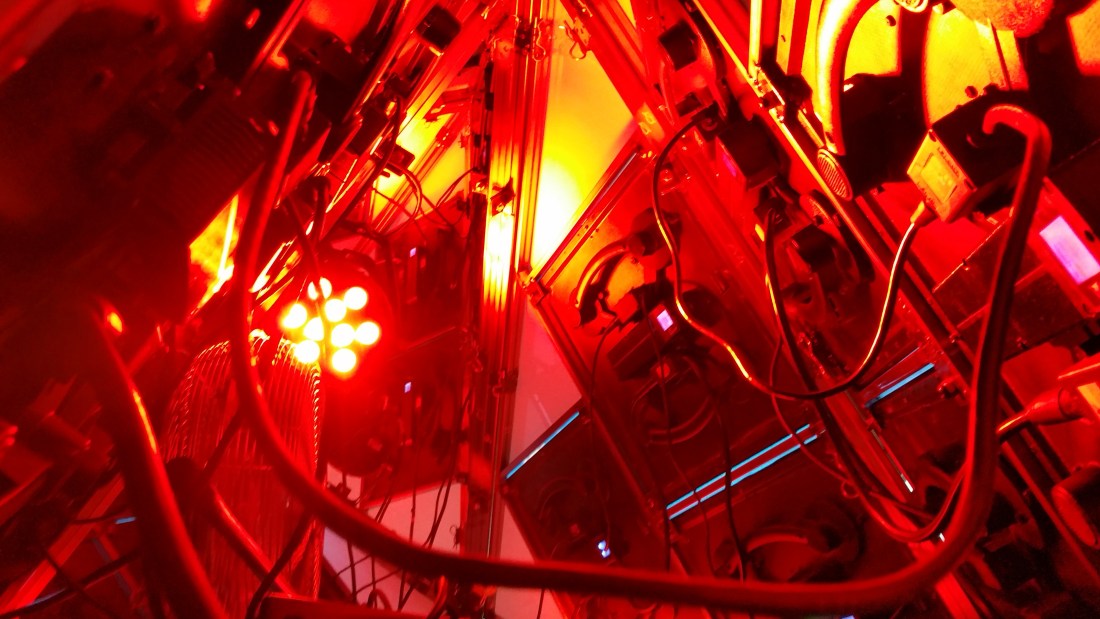 [/panel]


You must be logged in to post a comment.